
REVIEW · TEA CEREMONY & MATCHA SESSIONS IN OSAKA
Matcha Tea Bowl Experience in Osaka
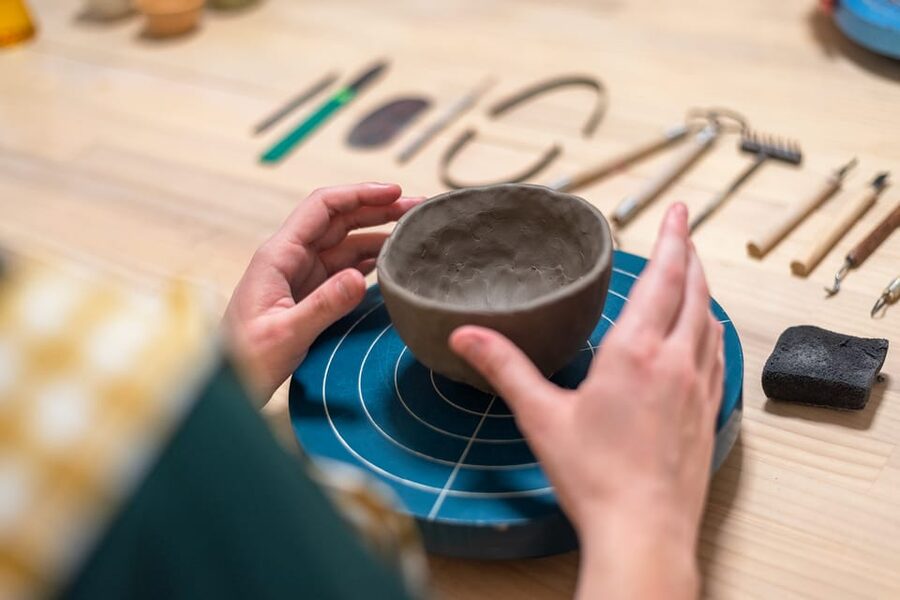
Carving clay for matcha feels oddly relaxing. In Osaka, this workshop helps you design your own chawan using kurinuki carving, then sign it with Japanese characters. It is a hands-on way to turn a trip souvenir into something you can actually use.
I especially love the tea ceremony context. You learn why a matcha bowl matters in the ritual, and you get to enjoy matcha with Japanese sweets right after your work.
One thing to consider before you book: your finished bowl ships about two months later, and the workshop price does not include shipping costs.
Key points to know before you go
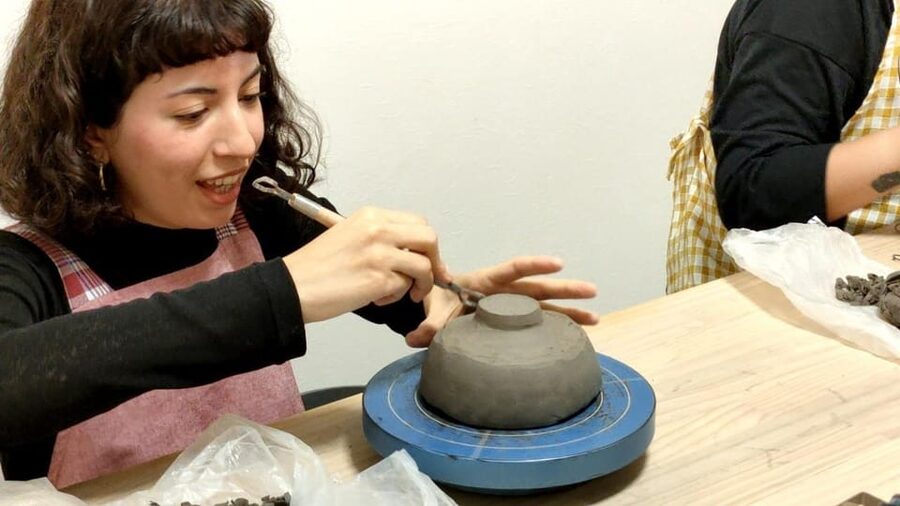
- Kurinuki carving: you carve the clay with tools to create a one-of-a-kind design with a wabi-sabi feel
- Bowl signing in Japanese: you write your name or message using Japanese characters on the bowl
- Tea ceremony meaning, not just craft: you connect your bowl to how matcha is served and appreciated
- Matcha plus Japanese sweets: you taste what you learned, at the end of class
- Private workshop setting: you meet in a traditional building with pick-up from JR Teradacho Station
- Two-month shipping timeline: the fired bowl arrives later, with shipping costs paid separately
Why make a matcha bowl in Osaka, not just buy one
Osaka is a great place to learn a craft like this because you get the everyday rhythm of the city, then step into a quieter space focused on ceramics. You are not just watching someone else work. You are shaping the bowl yourself, using a technique that rewards imperfections.
The kurinuki approach is the heart of the experience. Instead of painting or applying a single decorative layer, you carve the clay so your design lives in the surface. That is where the wabi-sabi character comes in, the idea that beauty can be found in texture, marks, and subtle variation.
The other big draw is the tea ceremony angle. Even if you have never done a formal ceremony, you learn how a matcha bowl supports the whole experience, from the feel of the ritual to the way matcha is prepared and shared.
Quieter hours: more tea rooms
Meeting at JR Teradacho Station and getting into the workshop flow
The workshop meets at JR Teradacho Station (north exit). You will spot the team because they carry a sign that says Ceramics Tocoton. If you opted into the station pick-up service, you start the experience with less stress and more time to settle in.
You should plan to arrive on time. If you are more than 15 minutes late, it can be treated as a no-show, so give yourself buffer time for trains, exits, and walking. The class runs about 90 minutes to 2 hours, so late arrivals can steal minutes from the carving stages where you need focused hands.
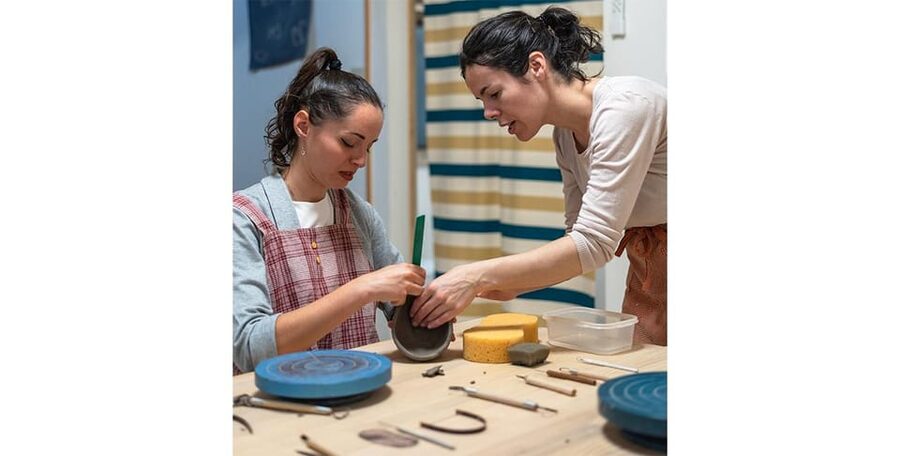
Inside, expect a traditional setting and a calm pace. It is a private group experience, so you get more attention and less waiting. That matters for beginners, because the bowls you make depend on small adjustments you can only get with a teacher close by.
Kurinuki bowl carving: how you shape your own chawan
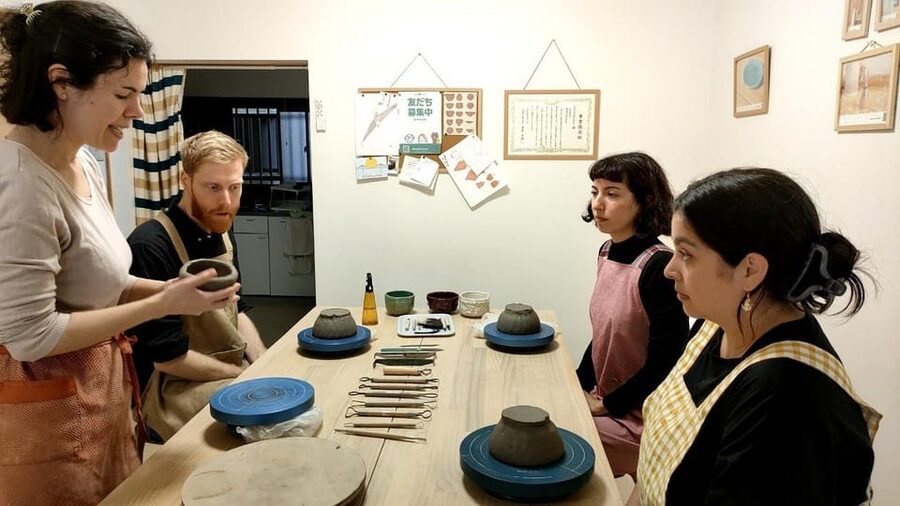
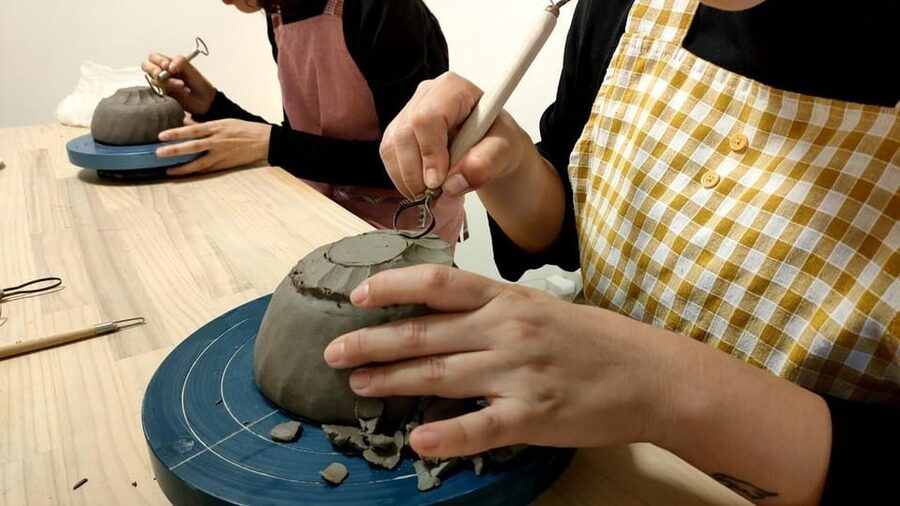
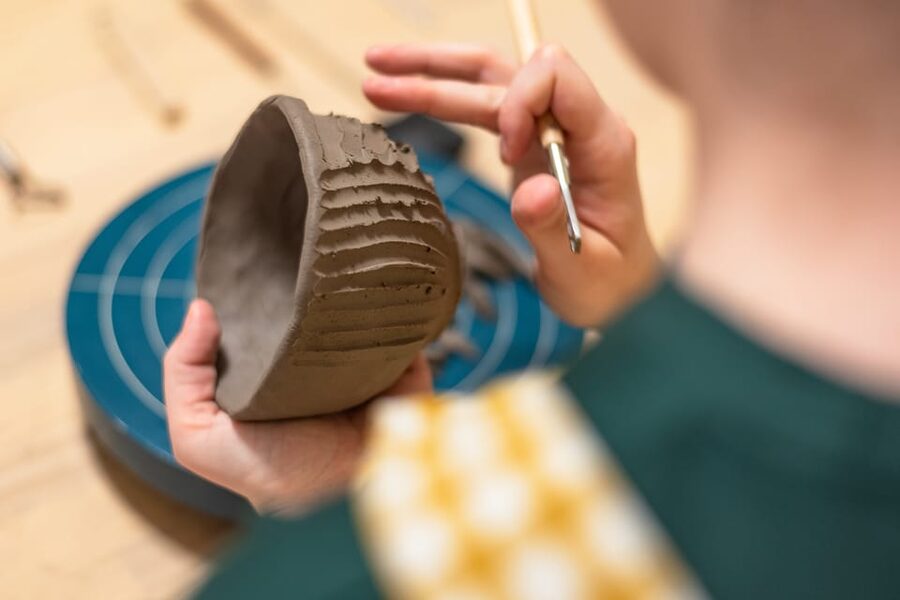
Your main task is decorating a matcha tea bowl using the kurinuki technique. You carve the clay using different tools to create lines, grooves, and textures. The result is intentionally personal. Your design will not look like a factory product because the process is physical, not pre-made.
You start by learning how the tools interact with the clay. Then you move into your own plan: where to carve, how deep to go, and how to balance pattern with the natural form of the bowl. If you worry you lack artistic talent, do not. This craft is more about decisions and guided corrections than about having perfect drawing skills.
What you are really learning is the logic behind Japanese craftsmanship. A good bowl is not only decoration. It is shape, surface, and suitability for matcha, plus the quiet “lived-in” character that comes from honest materials.
Also, you do not need prior ceramics experience. This is designed for first-timers, with instruction from Anna, who studied ceramics in Osaka. Her role is to guide you through each step and help you correct small issues while you still can.
Signing your bowl and choosing the final look
After the carving, you add your own signature in Japanese characters. This part feels surprisingly meaningful because it turns your bowl into a piece that is truly yours, not just something you made in a class. You can treat it like a personal stamp for your tea moments at home.
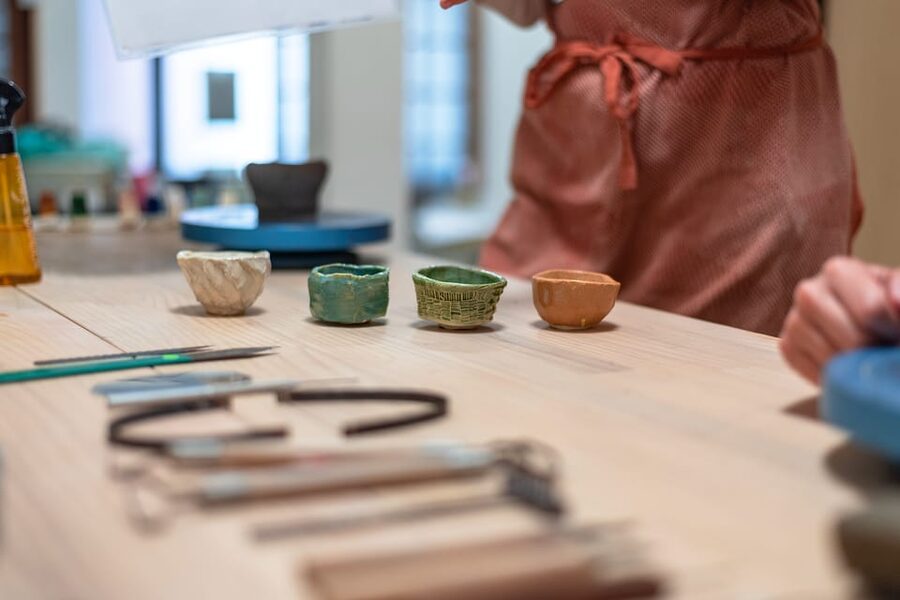
Then comes the part that helps you control the mood of the finished piece: you choose the color of your bowl at the end of the session. Color choice matters because it changes how your carved texture reads under light. Some glazes make grooves look sharper, others soften them.
Once the practical work is done, you do not just walk away. You get a drink after your bowl session, so you get a full loop: make something, then taste the culture that gave birth to it.
Matcha, sweets, and what the tea ceremony adds to your bowl
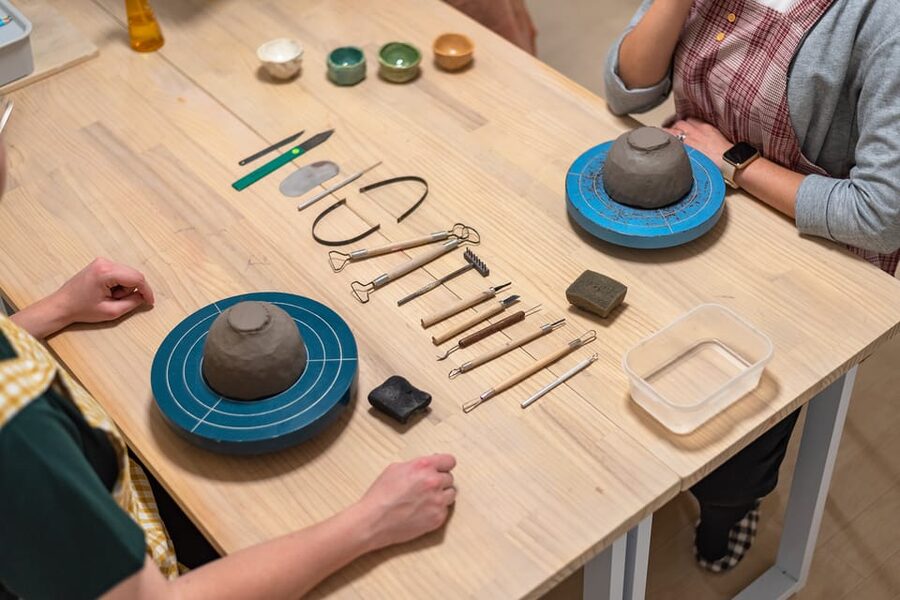
This workshop does not treat matcha as a prop. You get technical and cultural explanations that connect your craft to how matcha bowls are used in the tea ceremony.
During the session, you learn about the chawan as part of the ritual. That includes why the bowl’s surface and form affect the drinking experience, and how the bowl functions within the broader attention paid to tea. Even if you do not plan to hold a formal ceremony later, this context helps your souvenir feel like a story, not a trophy.
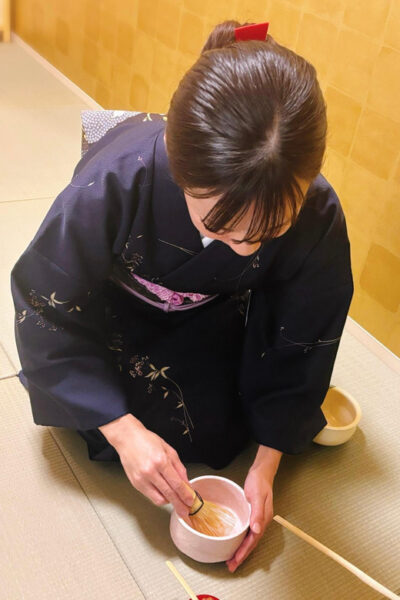
You also prepare and enjoy matcha tea with Japanese sweets. That pairing is practical and fun, because it lets you taste matcha in a way that fits how people actually balance flavors in Japan. It also gives you a satisfying end to the workshop, so the last minutes are not just wrapping up paperwork.
If you choose the optional combined workshop, you add a guided tea ceremony portion before the pottery. Tea ceremony masters Kiyomi and Masako guide you to prepare tea, then you enjoy matcha and Japanese sweets. After that, you shift to bowl making with Anna. The combined option also includes a small dish as a gift designed for sweets during tea at home, which is a thoughtful extra use for your new ceramics.

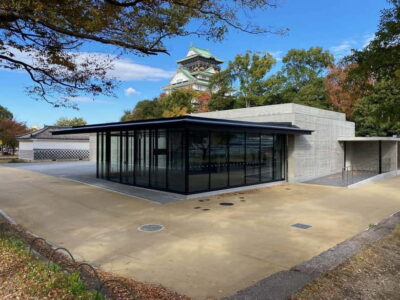

The private traditional building, and why group size matters
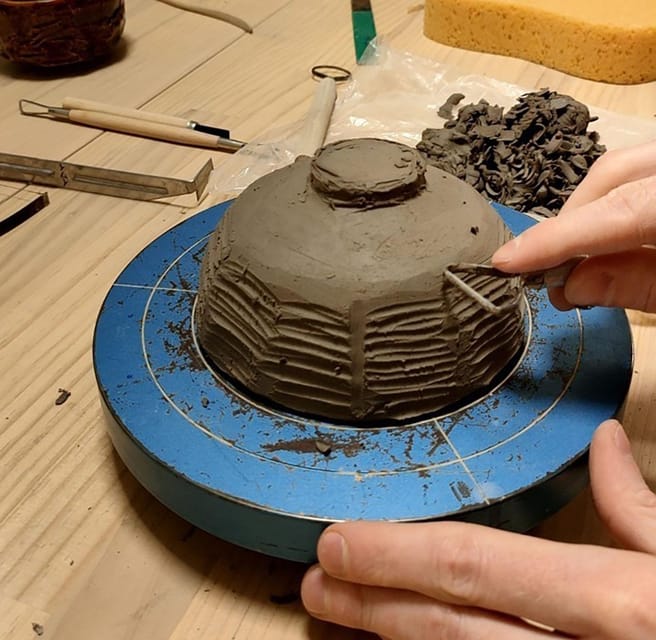
This experience is a private group, so you will not be squeezed into a room full of strangers and asked to wait while others finish. In practice, it can even feel very small, with sessions that end up as just a couple of people. That kind of ratio makes a difference because kurinuki carving is delicate, and you need quick feedback as you work.
The traditional building setting adds calm. It also helps you understand why the craft is taught the way it is. You are not in a rushed studio with a loud playlist. The atmosphere supports careful hand work and slower conversation.
Language support is another practical plus. The workshop runs in English or Spanish (and Catalan and Japanese are listed as options too). You should still use simple communication tips. If you know what you want your design to feel like, even in basic terms, it becomes easier to get the look you are imagining.
Take-home ceramics: gifts, shipping timing, and costs to plan for
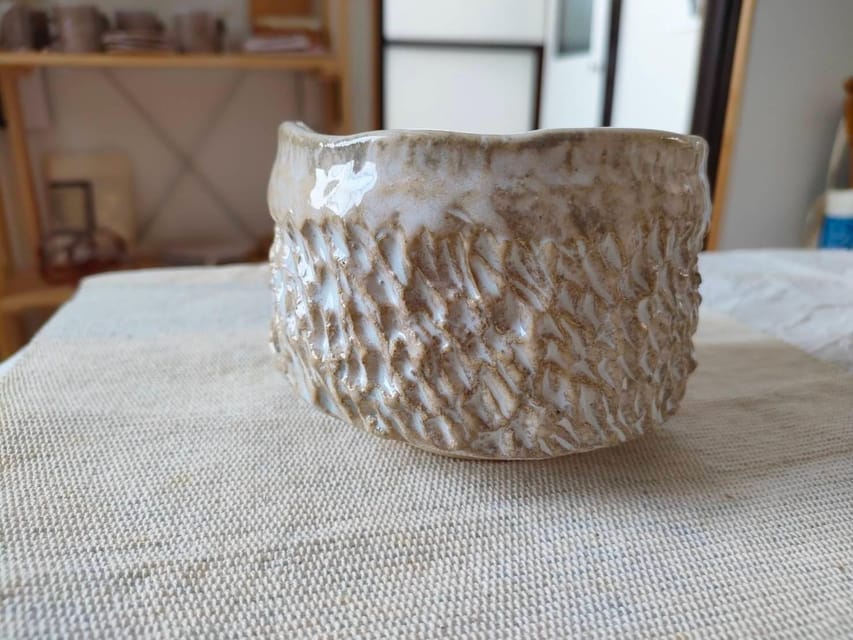
You do take home something right away. The workshop includes a ceramic gift, plus drinks during your session. The data also mentions a ceramic gift made during the experience, which is great because it gives you an immediate souvenir even though the main bowl will be fired and finished.
Your main matcha bowl ships to the address you provide. The timeline is about two months, and shipping costs are not included. That means you should budget separately for shipping depending on your country and the number of people in your booking. If you are traveling near-term, this is important. You will not have the finished bowl in your suitcase right away.
Plan around the shipping reality. If you want to use the bowl during the rest of your trip, you will not be able to. If you want a future home ritual, you are making something that will arrive when you are already back, ready to become part of your routine.
Price and value: is $83 really fair for this experience?
At $83 per person, this workshop can feel like a “craft day” price, not a cheap souvenir stop. But the value comes from what you are actually paying for.
First, you pay for instruction in a technique that takes real skill and time, kurinuki carving, plus cultural explanations that help you use the bowl properly in a matcha context. Second, the price includes materials and equipment, drinks, and a ceramic gift, so you are not getting a bare-bones activity.
Finally, the bowl itself is the main product, and your design is personalized. A lot of tourist pottery is mass-produced or only loosely customized. Here, your carving and signing are the customization, which is the difference between a decorative item and something that feels like your own work.
What you should treat as the wildcard is shipping. Because shipping is not included, your all-in cost depends on where you live and how many people you book with. If you are sensitive to surprise costs, message the provider ahead of time to get an estimate.
Who this is best for in Osaka
This is a great fit if you want a creative break from sightseeing that still connects to local culture. You will probably enjoy it most if you:
- like hands-on activities and do not mind focusing for about 90 minutes to 2 hours
- drink matcha or want to start, especially with the idea of using a real chawan
- want a souvenir that is personal, not just something bought at a shop
- prefer a private setup where you can ask questions and adjust your bowl as you work
It is less ideal if you are bringing young children. The activity is not suitable for children under 6 years old. It is also not suitable for wheelchair users because the space is not adapted.
If your schedule is tight, you should still be fine. The workshop is short compared with many multi-day craft experiences. The bigger time commitment is emotional patience, carving clay takes concentration, and rush is not the point here.
Should you book the Osaka matcha tea bowl experience?
Book it if you want a meaningful hands-on souvenir that connects craft with matcha culture. The combination of kurinuki carving, Japanese signing, and tea ceremony context is exactly the kind of experience that makes your trip feel specific to you.
Skip it or reconsider if you do not want to wait for shipping or if extra shipping costs would be a deal-breaker. Also, if accessibility is a concern, plan around the fact that the space is not wheelchair adapted.
If you do book, do one practical thing before you go: arrive early enough to start carving without stress. Then commit to the design process. Even if your first attempt feels tentative, that is normal. The finished bowl is supposed to reflect you.
FAQ
How long does the matcha tea bowl experience take?
The experience runs about 90 minutes to 2 hours.
What is included in the price?
The price includes station pick-up service, all materials and equipment, drinks, a ceramic gift, and technical and cultural explanations.
Where is the meeting point in Osaka?
You meet at JR Teradacho Station (north exit). The team will be carrying a sign that says Ceramics Tocoton.
Do I need experience with ceramics or speak Japanese?
No prior experience is required. The workshop is available in English or Spanish, and other listed language options include Catalan and Japanese.
When will my bowl be shipped, and is shipping included?
Your bowl is shipped to the address you provide in about two months. Shipping costs are not included, and the estimate depends on country and group size.
Is this workshop suitable for children or wheelchair users?
It is not suitable for children under 6 years old and it is not adapted for wheelchair users.
More Tour Reviews in Osaka




More Tea Rooms Worth Booking
Latest out of Osaka


Tea Ceremony & Matcha Sessions in Osaka, side by side.
 ★ 4.9Osaka: Tea Ceremony ExperienceFrom $251,426 reviews
 ★ 5.0Tea Ceremony Experience in Osaka DoutonboriFrom $20754 reviews
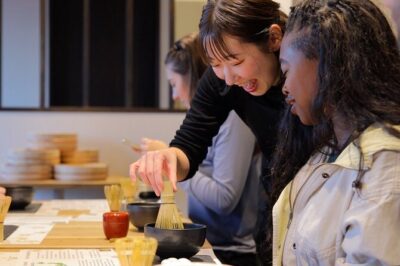 ★ 5.0Matcha Making Class in Osaka with Authentic Japanese Sweets SetFrom $21509 reviews
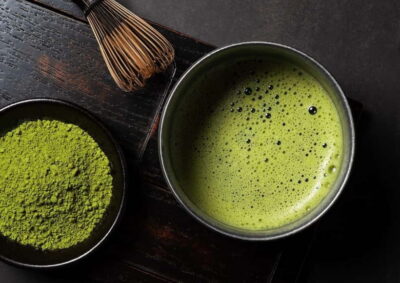 ★ 5.0Osaka: Matcha Making Experience with Japanese SweetsFrom $22146 reviews
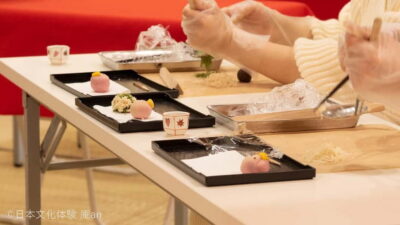 ★ 4.7Osaka: Japanese Traditional Sweets Making and Tea CeremonyFrom $18118 reviews
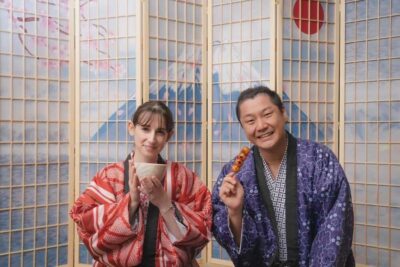 ★ 4.9Osaka Temple Cool Foot Bath & Matcha Experience〈45min〉From $3482 reviews
 ★ 5.0Samurai Show, Tea Ceremony, Japanese Traditional ActivitiesFrom $4456 reviews
 ★ 5.0Osaka: Private Tea Ceremony and Calligraphy ExperienceFrom $6450 reviews
Also worth a look in