
REVIEW · TOURS
Hidden Osaka – Yukaku Red Light Tour & Culinary Adventure
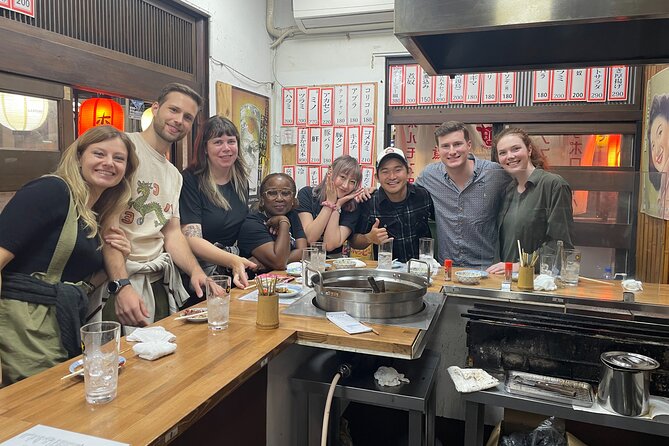
Osaka has a side few guidebooks cover. This small-group, 3.5-hour Yukaku red light district tour mixes street history with Osaka snacks in Shinsekai. It is not just a walk, it is also a lesson in how the area works, what is legal, and how to be respectful while you explore.
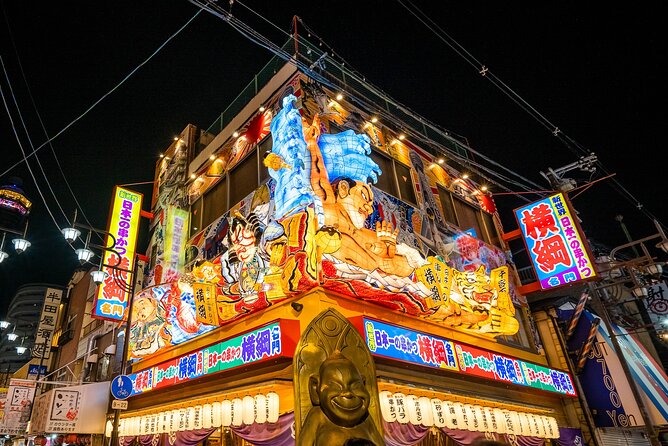
Two things I really like: you get the retro backstreets of Tobita Shinchi (including a spot tied to the Demon Slayer red light district look), and you finish with classic Osaka comfort food like kushikatsu and doteyaki. The food stops feel planned, not random.
One drawback to consider: this is an adults-only style outing. It can also feel a bit heavy on walking versus eating, depending on the day and guide, so come prepared with comfy shoes and a snack-free mindset.
Key things to know before you go
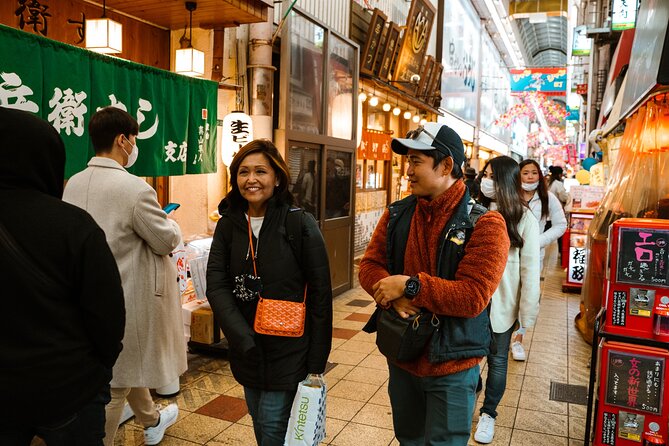
- Small group size (max 8) keeps the tone personal and helps your guide manage the streets responsibly.
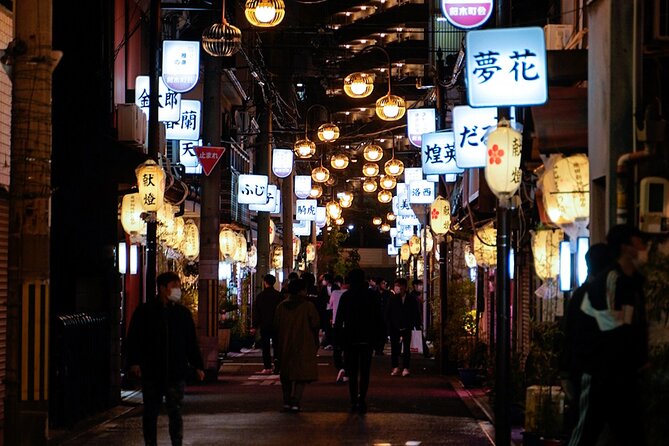
- Tobita Shinchi first sets context, including the why behind this being one of the last Yukaku areas of its kind.
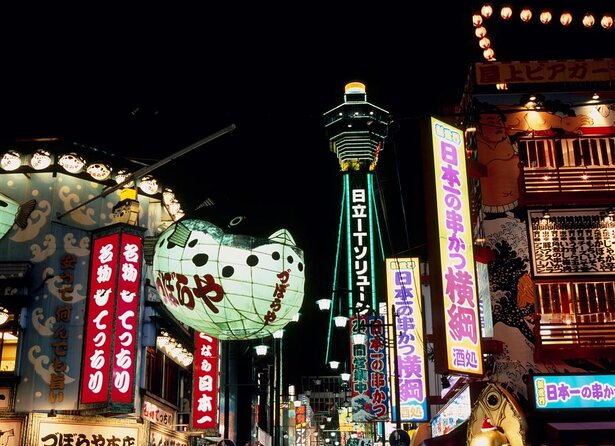
- Shinsekai and Tsutenkaku second gives you the old Luna Park era story plus classic Osaka bites while walking.
- Bold food choices are part of the deal, and the operator notes they are not responsible for allergy issues.
- Bring patience with pacing. Some feedback says food timing could be better, but the overall experience is strong.
Tobita Shinchi Yukaku: where the stories set the tone
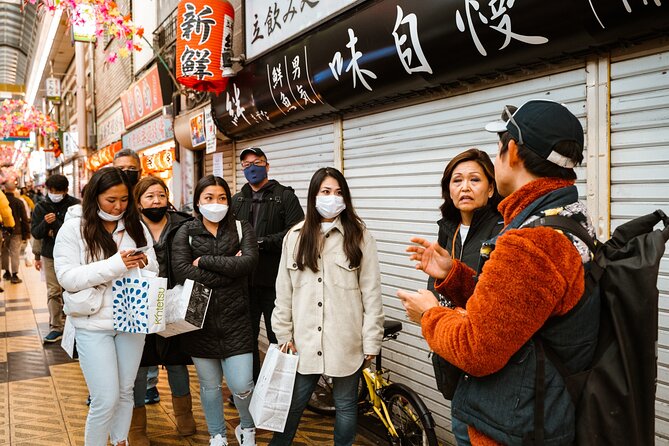
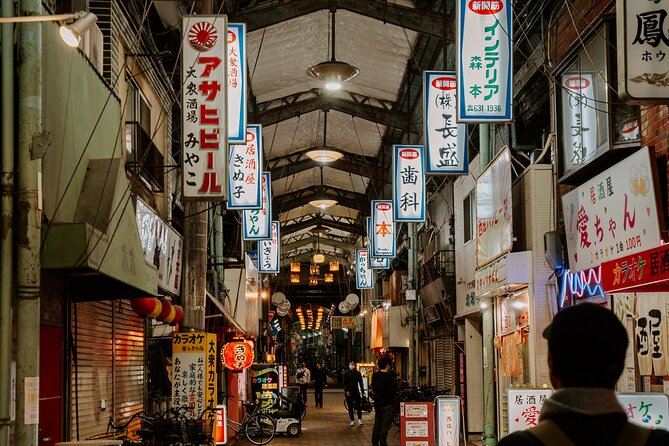
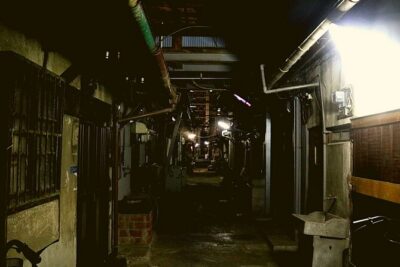
The tour starts in Tobita Shinchi, an area with a retro shopping street that has been around for nearly 100 years. Walking here at 6:00 pm feels right, because the atmosphere shifts from daytime shopping to night street life. You are not dropped into it cold, either. The guide’s job is to give you the background so you understand what you are seeing and why it matters.
A big reason this stop lands is the specific historical framing. You learn why the Yukaku model is fading in Japan, and why Tobita is often described as the last of its kind. That is not vague trivia. It helps you notice details you would otherwise miss, like how the district’s layout and storefront energy evolved over time.
Then there is the pop-culture connection. You visit a building that became a model for the red-light district edition of Demon Slayer. Even if you are not a hardcore anime fan, that kind of reference helps you connect real places to the images you already know.
Weigh this one against the Osaka bookings people rate highest:
The respectful part: rules, legality, and real street protocol
This is the part many people do not expect. The tour clearly signals that it is for mature audiences only, and it treats the topic with caution. Your guide walks you through cultural nuances and local rules, including how to enter and observe respectfully. They also explain legality issues that many visitors do not grasp.
In plain terms: this is not a free-for-all photo walk. You are there to understand, not to gawk. Guides like Leo, Rui, and Haruki (names you may hear assigned on the night) are praised for keeping the mood both funny and responsible. One review even notes the guide clarifies what is legal and what is not, which is exactly the kind of context that makes you feel less awkward.
If you are the type who gets uncomfortable with sensitive topics, this tour might not be your night. If you can handle mature themes and you want a human, on-the-ground explanation, this is where the experience earns its value.
Shinsekai and Tsutenkaku: eating while you walk through old Osaka
After Tobita, you head toward Tsutenkaku and the surrounding Shinsekai area. This is the energy shift. Tobita is story and context first. Shinsekai is texture, motion, and snacks.
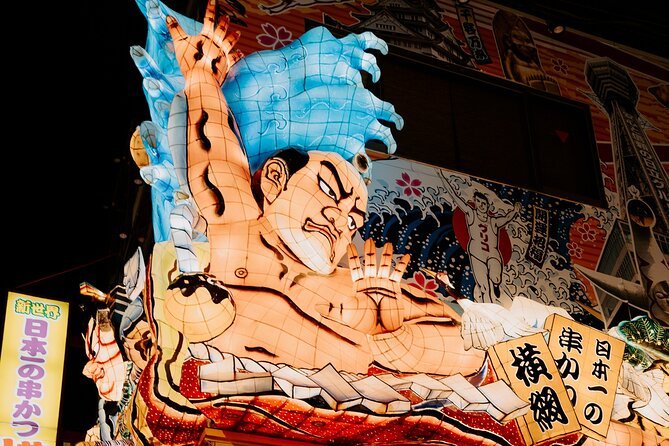
You get the neighborhood history as you go. The tour connects Shinsekai to the old Luna Park era and also explains background tied to Tsutenkaku’s founder. That matters because Shinsekai is not just a theme park nostalgia zone. It is a local hangout spot, with small places where people eat, drink, and sing karaoke. The point is to show how leisure spaces become daily life.
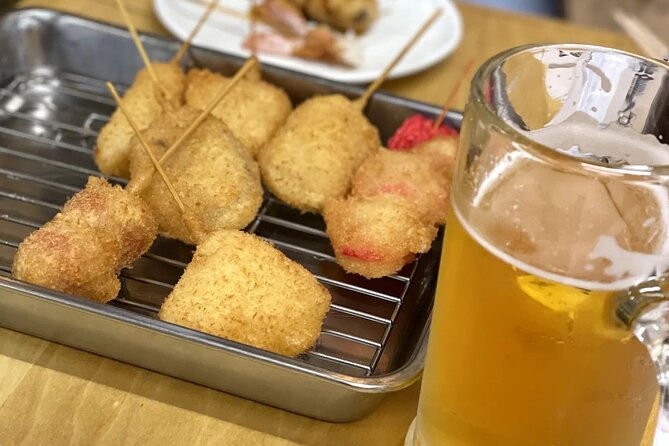
And yes, you end up eating as you walk. The food focus at this stage is distinctly Osaka:
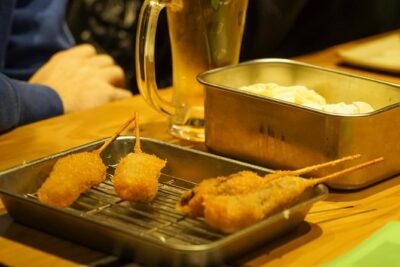
- Kushikatsu (fried skewers, often eaten with specific sauce etiquette)
- Doteyaki (hearty Osaka-style braised beef tripe)
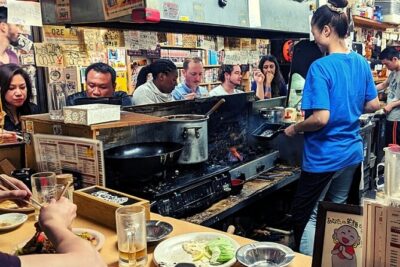
A few reviews also mention a small stand-up style bar stop as a first taste before the larger kushi-katsu moment. That pattern makes sense for pacing, because it gives you something right away while you keep moving.
Food and drink value: what $79 really covers
Let’s talk money in a way that helps you plan. The tour lists $79 and also notes an average izakaya spending benchmark of about ¥4000. That is your clue that you should expect extra food and drink costs, even if the main tour price gets you the guide and the structure.
In reviews, people suggest paying for the base tour and handling food costs separately because it can be cheaper than options that bundle everything. I treat that as good advice for budget control. If you have a yen budget you want to stick to, you will likely feel more flexible if you do not pay a bundled upsell.
Practical budgeting tip: if you are trying unfamiliar dishes, you will probably want to order what the guide recommends rather than playing it safe. That naturally pushes your spend toward that ¥4000 zone.
Also, have a plan for cash. One review flags that some stops can be cash-only, and when you are moving between tiny places, it is annoying to scramble. Bring some yen, even if you also use a card where you can.
Pacing and timing: 3.5 hours sounds simple, but plan your expectations
The tour runs about 3 hours 30 minutes, starting at 6:00 pm and ending back at the meeting point. Stop one is around 1 hour, and stop two is around 2 hours. So the day is split: context first, then food and wandering.
Here is what you should know before you go. Some feedback says the walking-to-food ratio could be better, with one comment pointing out that the experience could feel like it should be shorter and that tastings could be spaced out more. That does not mean the food is bad. It means you might get a bigger walking block before the main eating.
You can solve most of that with one simple choice: eat a light snack before you start, not a full meal. One review specifically recommends a light snack because you walk for about an hour before the izakaya-style food. That way, you are not miserable while you wait, and you still have room to enjoy the tastings.
Comfort matters too. Wear shoes that can handle uneven sidewalk textures and late-night crowds. This tour is compact, but you are still walking the whole time.
What the guides actually do well on this route
The best compliments in the reviews are about the human part, not the signage. People repeatedly mention that guides keep things engaging, funny, and easy to understand, while also sharing real protocol and history that you would not get from a typical sightseeing script.
You might meet guides named Rui, Ruiy, Leo, or Haruki (different nights can feature different hosts). The consistent pattern across feedback is:
- the guide makes you comfortable in a delicate setting
- the guide explains rules clearly
- the guide picks food that fits the neighborhood
- the group stays small, so you can ask questions
That last one is underrated. With a maximum of 8 people, your guide can tailor the pace and answer questions without the chaos of big bus tours.
One review notes the guide grabbed an umbrella for rain. That is not a guarantee, but it is a reminder: bring a small umbrella. Osaka weather can shift fast, and you are out on streets the whole time.
Who this tour fits, and who should skip it
This is where I get blunt, because the tour deserves it. It is described as not for everyone, and that is accurate.
Best for:
- adults who like learning social history, not just architecture photos
- food lovers who are comfortable trying dishes they have never ordered
- people who want a local night out in areas most visitors do not approach in a respectful way
- anyone who prefers small groups and real conversation
Not best for:
- anyone easily uncomfortable with adult subject matter
- families looking for a kid-friendly Osaka evening
- people who need heavy dietary accommodation, since the operator states they are not responsible for allergies or accidental ingestion
If you are in the middle, ask yourself: do you want explanation and etiquette, or do you want a casual night with no context? This tour is the first option.
Before you book: my decision checklist
If you want a classic Osaka highlight like a temple loop, this is probably the wrong fit. But if you want an Osaka night that feels specific, human, and a little unexpected, this one makes sense.
I think you should book if:
- you are excited by Shinsekai and want to understand Tsutenkaku’s background
- you are curious about Tobita Shinchi beyond headlines
- you like guided street food experiences where the guide leads you to dishes you might skip
- you are okay paying for food and drink separately, with an average around ¥4000
I would think twice if:
- you cannot handle mature themes
- you have strict allergies or food restrictions and cannot communicate them confidently
- you hate walking and want more time seated with lots of food stops
If you match the vibe, this is one of the better ways to see Osaka after dark, with context you simply do not get from standard sightseeing.
FAQ
How long is the Hidden Osaka Yukaku Red Light Tour & Culinary Adventure?
It runs for about 3 hours 30 minutes.
What time does the tour start, and where does it meet?
The tour starts at 6:00 pm. The meeting point is Causerie 1-chōme-2-28 Taishi, Nishinari Ward, Osaka 557-0002, Japan, and it ends back at the same meeting point.
How many people are in the group?
The tour has a maximum group size of 8 travelers.
What will I see during the tour?
You will walk in Tobita Shinchi and then in the Tsutenkaku and Shinsekai area, including historical stops and the chance to try local Osaka dishes while walking.
Is food and drink included?
The tour includes a hand-picked selection of Osaka dishes paired with a drink. The operator also provides an average izakaya spending benchmark of about ¥4000.
Are there options for languages besides English?
Spanish and French options are available if you send a message to the operator.
What should I know about allergies?
The operator states they are not responsible for allergies or accidental ingestion, so you should plan carefully and communicate as needed.
More Tours in Osaka
More Tour Reviews in Osaka
Latest out of Osaka


Tours, side by side.
 ★ 5.0Osaka Go Karting Tour with Funny CostumeFrom $462,658 reviews
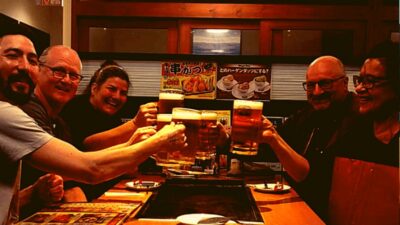 ★ 4.8Osaka: Shinsekai Food Tour with 13-15 Dishes at 5 EateriesFrom $532,204 reviews
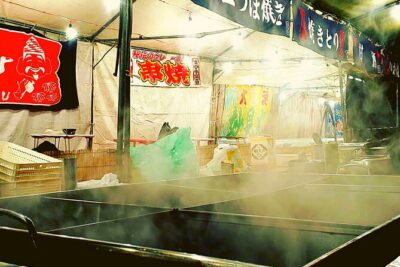 ★ 5.0Osaka Food Tour: 13 Dishes at 5 Local EateriesFrom $732,149 reviews
 ★ 5.0Osaka Kickstart: Hotspots & Hidden Gems TourFrom $311,306 reviews
 ★ 5.0Deep Backstreet Osaka Tours (Option to add Dinner)From $531,290 reviews
 ★ 5.0Osaka Local Foodie Walking Tour in Dotonbori and ShinsekaiFrom $111985 reviews
 ★ 5.0Osaka Bar Hopping Night Walking Tour in Namba (3 bars, 6 tastes)From $98958 reviews
 ★ 4.7Osaka/Kyoto: Hiroshima Miyajima Bus Tour & Shinkansen TicketFrom $277919 reviews