
REVIEW · AMANOHASHIDATE & INE FUNAYA TRIPS
Amanohashidate Ine Funaya Miyama Village No Sato Tour from Osaka
Four sights, one long scenic loop.
What makes this trip interesting is how it strings together two standout villages, then funnels you to Japan’s famous pine-covered sandbar, plus a temple stop that’s known for prayer related to academic success. You also get time to explore on your own, including the classic upside-down viewing tradition at Amanohashidate.
I love the pairing of villages: Ine Funaya’s wooden boathouses right on the coast, and Miyama Kayabuki no Sato’s thatched-roof homes with about 50 preserved structures. I also like the practical setup, with a multilingual guide (Chinese/Japanese/English/Korean) and free admission tickets listed for each of the four major stops.
One consideration: it’s a long day, roughly 9 to 10 hours, starting at 7:20 am. Stop times are tight (about 40 minutes at Ine Funaya and 40 minutes at Kayabuki-no-sato), and because it’s a carpooling trip, being late can mean you miss parts with no refund.
Key things that make this day tour worth it
- Ine Funaya boathouses: wooden funaya lined along the coast, made for close-up photos
- Amanohashidate sandbar views: a 3.6-kilometer natural sandbar with over 8,000 pine trees
- Upside-down viewing tradition: a fun, easy-to-try photo moment at Amanohashidate
- Chion-ji Temple focus: Monju Bosatsu, the Bodhisattva of wisdom, tied to academic success prayers
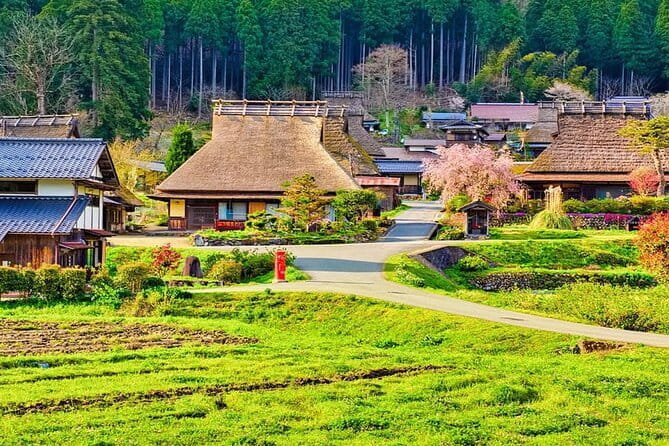
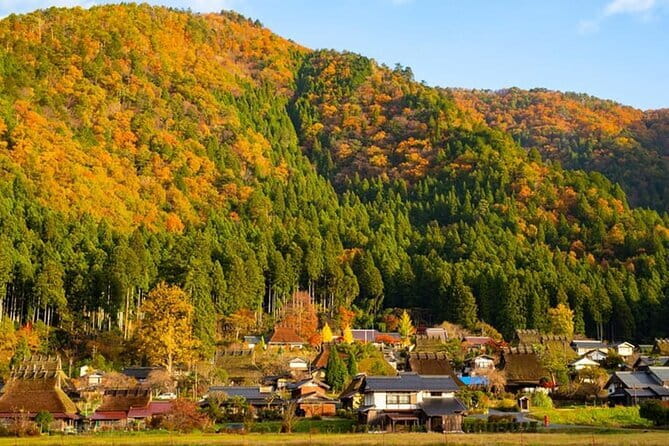
- Kayabuki-no-sato Kitamura: about 50 preserved thatched-roof houses showing rural architecture
- Multilingual guide + small maximum group size: guide support for four languages, capped at 46 people
How these stops connect into one great day from Osaka
This is the kind of day plan that works because each stop has a different “flavor,” and you don’t waste the whole day hopping between places that feel too similar. You start with coastal charm at Ine Funaya, shift to a big iconic view at Amanohashidate, slow down at Chion-ji Temple, then finish with rural scenery at Miyama Kayabuki no Sato.
The big win for you is contrast. You’ll go from wooden boat-house alleys to a long pine-lined sandbar, then into a quieter temple setting, and finally into a village scene that feels removed from big-city motion. It’s also balanced for photos, because each main point is well-known and built for walking.
Also, the schedule is designed around sightseeing blocks with short transfers included in total time (9 to 10 hours). That matters if you only have one full day and you’re trying to get real variety without turning it into a multi-day logistics headache.
Up to the north coast
Morning logistics near Nipponbashi, and why timing matters
Your day begins at 1-chōme-3 Nipponbashi Parking, with a start time of 7:20 am. That early start is not just tradition, it’s how the tour fits four major places into one day without killing your time at each stop.
It’s also a carpooling style trip, not an open-ended free-for-all. The operator is very clear that you need to be on time at the meeting point and at attractions. Traffic jams can happen, and in that case the tour order may be adjusted, but they also note that delays due to traffic are your reality to manage.
One practical thing I like here: the guide is listed as speaking Chinese, Japanese, English, and Korean. That doesn’t guarantee perfect pacing for every group member, but it does reduce the chance you’ll feel lost when asking simple questions like where to go next or how long you should plan to stay.
And the group size is capped at 46 travelers. That’s big enough to feel like a real tour, but small enough that you can still enjoy each place without always feeling stuck in a human stampede.
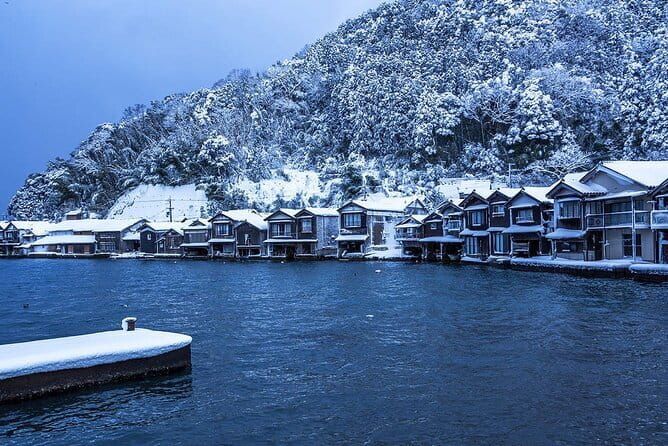
Ine Funaya, Fuga: the coastal boathouse village look that photographs itself
Ine Funaya, Fuga is often linked to the idea of the Venice of Japan, and you’ll understand why quickly once you see the funaya boathouses sitting along the coastline. This is the kind of place where you don’t need a “perfect plan” to enjoy it, because the setting gives you lines, angles, and textures as soon as you arrive.
You get about 40 minutes here, and admission is free. That short time is a blessing and a curse. It’s great because you can focus on the best photo corridors and a comfortable walk without feeling like you’re stuck for hours. It’s also short enough that if you want long, slow wandering or you keep stopping to study every detail, you might feel rushed.
Still, this stop is one of the strongest value points in the day because it gives you an immediate sense of place. Wooden structures, water views, and a coastal village mood are a powerful mix, and the short visit keeps you from draining energy before Amanohashidate.
Amanohashidate: pine sandbar scale, plus the upside-down viewing moment
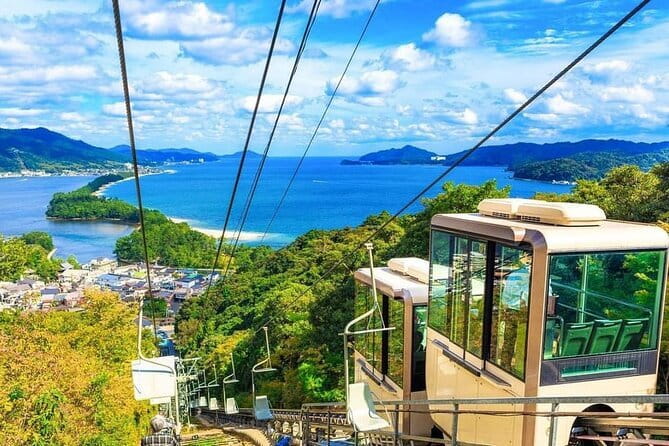
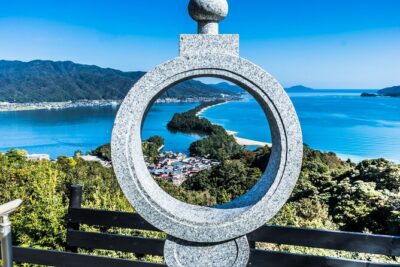
Amanohashidate is the big headline stop, and it earns the attention. The sandbar stretches 3.6 kilometers and is lined with over 8,000 pine trees, creating that iconic long-view look that’s hard to replicate elsewhere.
You get about 1 hour 30 minutes here, and admission is free. You also get self-guided exploration time, which I think is the right balance. A guided explanation can be nice, but this is a place where you mostly want freedom to walk, look, and take photos from multiple angles.
Two practical tips if you want the best chance at fun photos:
- Plan to arrive at viewpoints with enough time to look from more than one angle. A sandbar view changes as your position changes.
- If you’re trying the upside-down viewing tradition, be ready for a quick setup and a short moment to frame the shot. It’s playful and memorable, but it’s not a long ceremony-style activity based on the time you have.
You’ll also notice how the name Amanohashidate means Bridge in Heaven. That poetic naming shows up in the way the pine-covered sandbar reads like a natural bridge line stretching through the water.
Chion-ji Temple at the south end: a calm break with a specific reason to pray

After the sandbar, the day shifts gears to Chion-ji Temple, located at the southern end of Amanohashidate. You’ll only have about 30 minutes, and admission is free, but this stop works well as a mental reset.
This temple is known for Monju Bosatsu, the Bodhisattva of wisdom, and it’s especially connected to academic success prayers. If you like having a clear focus for what you’re doing at a shrine or temple, this one gives you that. You’re not just passing through. You have a concrete theme: wisdom and success.
In practical terms, 30 minutes is enough time to:
- take in the atmosphere without feeling hurried beyond what you can handle
- pause for photos if allowed in your specific area
- decide how you want to participate, based on your comfort level
The main drawback is simple: if you’re someone who loves long temple walks and multiple prayer spots, you may wish for more time. But the tour keeps this stop short so you can still enjoy the final village section at Miyama Kayabuki no Sato.

Miyama Kayabuki no Sato Kitamura: thatched roofs and rural architecture you can actually walk through

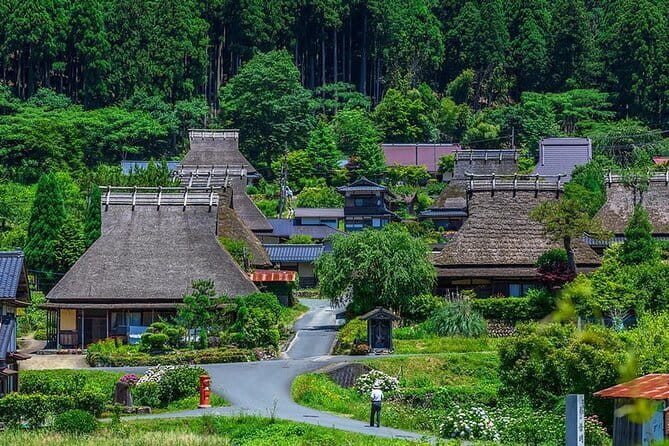
Miyama Kayabuki no Sato, specifically Kayabuki-no-sato Kitamura, is the rural-visual payoff of the day. You’ll see preserved thatched-roof houses, and the tour description notes about 50 preserved homes. That number matters because it means you’re not just popping into a single photo spot, you’re moving through a village-style cluster.
You get about 40 minutes here, and admission is free. This is enough time to enjoy the overall layout, take photos from a few different angles, and feel the shift from coastal to countryside.
One thing I like for your planning: a village with thatched roofs usually rewards slow movement, even if you only have a short block of time. If you tend to walk fast, try to slow down just here. The details in old-style architecture show up in textures, roof lines, and the way buildings relate to one another.
This is also a great place for people who want something “Japan rural” but don’t have time for a longer day trip. Done right, this stop gives you a strong sense of rural Japanese architecture without requiring you to book separate train rides and figure everything out.
Lunch timing and how to keep energy up for the full 9 to 10 hours
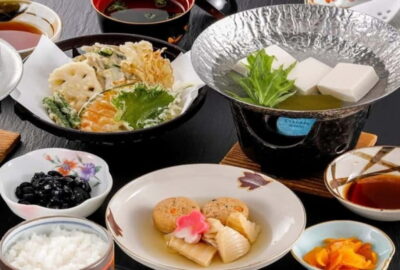
The trip plan includes time to savor a lunch described as fresh local seafood. Since it’s part of the day’s flow, treat lunch as fuel, not an optional stop.
With a schedule that spans 9 to 10 hours and multiple short viewing blocks, you want to avoid the common mistake of skipping food because you’re busy taking pictures. If you’re sensitive to timing, you can also plan to eat quickly and keep your energy steady so you don’t feel sluggish on the final village portion.
A practical strategy: decide in advance what you want to prioritize for photos at each stop. If you try to photograph everything at once, you’ll spend the lunch break wishing you had more time later. If you have a photo plan, the day becomes easier.
Price and value: what $89.99 really covers in real terms
At $89.99 per person, this is a structured day trip with multiple major photo destinations, guide support, and free admissions listed for each major stop. The value comes from the combination.
Here’s what you’re paying for, in practical terms:
- transportation from Osaka to four distinct scenic areas across the day
- a multilingual guide (Chinese, Japanese, English, Korean)
- organized timing that compresses a lot into about 9 to 10 hours
- free admission tickets for the stops listed
Compared to building it yourself, the cost can still feel reasonable because you’d normally spend time and money coordinating transport, entry, and the pacing between far-apart areas. Also, the tour is booked on average about 50 days in advance, which suggests demand. When demand is high, it can be hard to recreate this kind of one-day concentration on your own without extra planning time.
So, the question isn’t only “Is it cheap?” It’s “Does it save me mental energy while delivering the right mix of places?” For many people, the answer is yes, especially if you only have one day to spare.
Who this tour fits best, and who should think twice
This day tour is a strong fit if you want iconic scenery plus two village experiences in one block of time. It also works well for people who prefer guided support for navigation and basic coordination, without giving up self-guided exploration at the key sightseeing stop.
It may be less ideal if:
- you hate long days, because start time is 7:20 am and the total day runs about 9 to 10 hours
- you need lots of time to linger at each stop, because time windows like 40 minutes are built in
- you’re worried about tight timing, since being late can reduce what you get to see and they state no refund for lateness
It’s also worth noting some age and planning rules that can affect your comfort. Seniors aged 70+ should present a medical certificate before participating. Children aged 0-2 are free as long as they will not occupy separate seats. Most travelers can participate, but if you have mobility or stamina limitations, the day length is the main thing to consider.
My take: should you book this one-day Osaka tour?
I’d recommend booking if you want a single-day “greatest hits” approach with real variety: Ine Funaya for coastal wooden boathouses, Amanohashidate for the pine sandbar and the upside-down viewing moment, Chion-ji Temple for a focused prayer stop tied to wisdom and academic success, and Miyama Kayabuki no Sato for thatched-roof rural architecture.
I would think twice if you’re the type who needs long stretches at each place. This tour is designed to move. It gives you highlights, not extended wandering time. If you can accept that tradeoff, you’ll likely feel satisfied because each stop is distinctive and visually strong.
If you do book, go in with a simple mindset: choose your top photo goals per stop, eat lunch like you mean it, and protect your timing. Do that, and this feels like a very efficient way to see some of Japan’s most photographed scenery without overcomplicating your travel day.
FAQ
What time does the tour start and where do I meet?
The tour starts at 7:20 am at 1-chōme-3 Nipponbashi Parking, 1-chōme-3 Nipponbashi, Chuo City, Osaka 542-0073, Japan.
How long is the Amanohashidate, Ine Funaya, and Miyama Village tour?
The tour lasts about 9 to 10 hours, including travel time.
How much does the tour cost?
The price is $89.99 per person.
What language support do I get during the tour?
The tour includes a Chinese/Japanese/English/Korean-speaking guide.
How many people are in a group?
This tour has a maximum of 46 travelers.
Is admission free for the main stops?
Admission tickets are listed as free for each of the stops included in the schedule.
Where does the tour end?
The tour disbands at the Shinsaibashi and Dotonbori areas, with the end address listed as 542-0085, Japan.
What is the cancellation policy?
You can cancel for free up to 24 hours in advance for a full refund. The experience also requires good weather, and if it is canceled due to poor weather, you will be offered a different date or a full refund.
More Tours in Osaka




More Tour Reviews in Osaka
More Amanohashidate & Ine Funaya Trips in Osaka




Latest out of Osaka


Amanohashidate & Ine Funaya Trips, side by side.
 ★ 5.0Osaka Day Tour: Amanohashidate & Ine BayFrom $84280 reviews
 ★ 4.6Osaka/Kyoto: Amanohashidate & Miyama Tour with Boat & LunchFrom $71207 reviews
 ★ 4.5Amanohashidate & Ine Funaya Sightseeing Full Day Trip from KyotoFrom $6462 reviews
 ★ 4.5Amanohashidate & Ine Boathouse Full-Day Tour from Kyoto or OsakaFrom $4848 reviews
 ★ 3.7From Osaka/Kyoto: Amanohashidate Day Tour【Including tickets】From $5820 reviews
 ★ 4.5Amanohashidate & Ine Funaya Kyoto coast day trip from Osaka/KyotoFrom $8417 reviews
 ★ 5.0Kyoto Amanohashidate and Ine No Funaya Tour from OsakaFrom $553 reviews
Also worth a look in