
REVIEW · KYOTO EXCURSIONS FROM OSAKA
3 Days Private Osaka Kyoto and Nara Tour With English Driver
A private driver makes Japan feel simple. This 3-day Osaka, Nara, Kyoto plan mixes iconic landmarks with private transport and an English-speaking driver who helps keep your days moving. I especially like that you can focus on the sites and food instead of figuring out trains, transfers, and schedules between cities.
My other favorite part is the mix of “big ticket” stops and real-world breaks, like the Cup Noodles Museum and a possible onsen pause. The main drawback to plan for is that many entry fees are not included, so your total cost can rise fast once you add places like Todai-ji, Kinkaku-ji, gardens, and Gion.
Key highlights to expect
- English-speaking driver, private pacing: You get a custom flow based on your group.
- 3 city sweep with sensible time blocks: You cover Osaka, Nara, and Kyoto without feeling like a train roster.
- Day 1 Osaka mix: Castle views, shrines, shopping at Shinsaibashi-suji, and the Cup Noodles Museum.
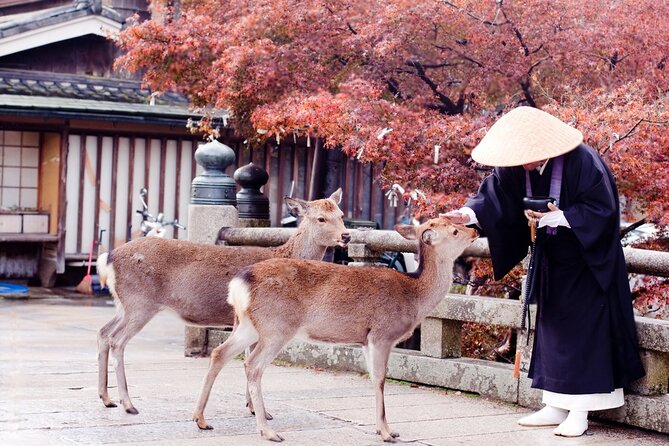
- Nara classics plus calm add-ons: Deer Park and Todai-ji paired with museums and gardens.
- Kyoto highlights that match how people actually visit: Kinkaku-ji, Fushimi Inari, Kiyomizu-dera, Gion, plus Nishiki Market.
- Budget for admission fees: Several major attractions charge per person, and the onsen stop is extra.
Why this 3-day Osaka, Nara, Kyoto private tour is a smart idea
If you want Kyoto and Nara without spending your vacation glued to a station map, a private driver changes everything. You still see the famous sights, but you spend more time walking where it matters and less time commuting between districts.
I also like that the tour is designed as a full 3 days, not a “hit 20 places and disappear” day. With stops like Osaka Castle, Todai-ji, Kinkaku-ji, and Fushimi Inari on the schedule, you’ll get the highlights people come for, while still having windows to look around.
One practical note: this is private, so it’s for your group only. That matters because you can move at a pace that fits you, instead of being dragged along with strangers who don’t care about every detail.
Other Kyoto days, compared
Day 1 Osaka Castle, shrines, shopping arcades, and a noodle-history stop
Osaka can feel like a full-contact city, in the best way. Day 1 leans into that energy with major landmarks and stops that show different sides of Osaka, from old temples to modern city fun.
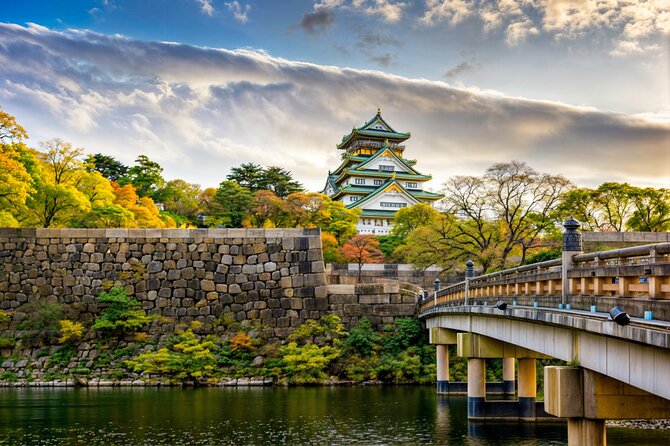
Osaka Castle: the fortress views and the photo payoff
Osaka Castle is on the schedule for about 40 minutes, with the admission fee listed as not included. Even if you don’t go deep into every exhibit, this is a great orientation stop: you’ll get a clear sense of the city’s shape and where you are in Osaka.
Tip: Go early in your day so you can enjoy the grounds without racing the crowds. If you’re sensitive to heat, this timing also gives you a calmer start before the rest of the day adds walking.
Shitennoji and Sumiyoshi Shrine: older Osaka in smaller doses
Shitennoji is one of the city’s oldest Buddhist temples, and it’s planned for about 50 minutes. Nearby stops include Sumiyoshi Shrine, which is listed as free and takes about 40 minutes.
This combination works because Osaka is famous for food and nightlife, but it also has long, layered religious history. These stops slow your pace just enough to balance the rest of Day 1.
Shinsekai Inari Shrine: a local-feeling shrine stop
Shinsekai Inari Shrine is scheduled at about 45 minutes, with the admission fee listed as not included. Shinsekai itself is a recognizable Osaka neighborhood, and this shrine stop gives you a more grounded, everyday feel than the biggest tourist sites.
Consideration: Shinsekai can be busy, and if it’s hot, your best move is to treat the shrine as a “see it, respect it, move on” stop and keep your energy for the later parts of the day.


Cup Noodles Museum Osaka Ikeda: food history you can actually do
This stop is listed as free and about 40 minutes. Instead of just looking at objects, you get an interactive, hands-on feel around instant ramen history, including a build-your-own type of activity described in the tour details.
If your group likes food culture, this is one of the most memorable non-temple stops. It’s also a useful break when you want something light, fun, and indoors.
Solaniwa Onsen Osaka Bay Tower: recovery time for your feet
Solaniwa Onsen Osaka Bay Tower is listed with an admission fee not included and about 45 minutes. This is one of those “you’ll thank yourself later” choices, especially if you’re walking a lot across castle grounds, temples, and shopping streets.
Simple strategy: Pair it with a slower start the next day, or at least plan an early evening so you don’t feel wiped out.
Shinsaibashi-suji shopping street and Dotonbori street food area
Shinsaibashi-suji is on the plan for about 1 hour and listed as free. The shopping street stretches roughly 600 meters, so you can browse without committing to a full shopping marathon.
The tour overview also sets you up for street food time in the Dotonbori area on Day 1. That’s a smart fit because you’re already in central Osaka for the day. Just keep your water handy.
Sakai City Hall Observatory 21st floor: a free view stop
There’s a free observatory stop listed at about 50 minutes. This is a good “reset” between cultural sights and shopping, because it gives you a high-level view and a chance to cool down indoors.
Day 2 Nara deer park, Todai-ji, and gardens for a calmer rhythm

Day 2 is all about Nara’s slower pace. It’s the day where you swap Osaka’s street energy for park walks, temple scale, and quieter moments.
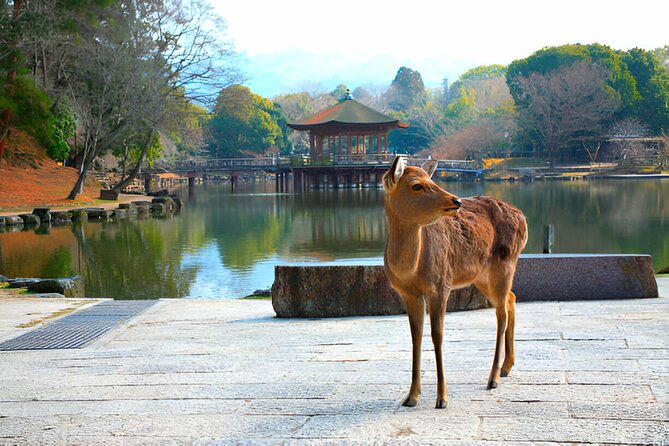
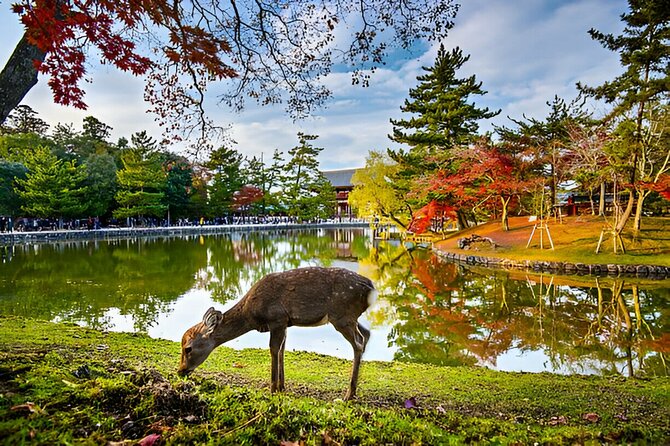
Nara Park: deer encounters and a lot of walking space
Nara Park is scheduled for about 1 hour 30 minutes and its admission fee is listed as not included. The park is described as very large, and the deer are a major feature.
What to know: Deer are part of the scenery, not a cute side quest. You’ll want to stay alert around them, keep your hands and food controlled, and use this time to enjoy the open space instead of rushing through.
Todai-ji: the Great Buddha Hall effect
Todai-ji is the headline stop, planned for about 50 minutes, with an admission fee not included. The details highlight the Great Buddha Hall (Daibutsuden), and this is one of those places where you understand why people travel for ancient monuments.
Because your time is limited, aim to see the big areas first, then decide if you want additional indoor time. This keeps you from turning the visit into a checklist.
Kasuga Taisha Museum, Kofuku-ji, and Nara National Museum: context breaks
Kasuga Taisha Museum is listed at about 50 minutes. Kofuku-ji is planned for about 40 minutes, also not included in the admission list. The Nara National Museum is another context-heavy stop for around 50 minutes.
This cluster is valuable because it adds meaning. Instead of just snapping photos, you get more of the “why” behind the temples and shrine culture you’re seeing.
Naramachi: wooden lanes and old-town atmosphere
Naramachi is scheduled for about 40 minutes and is listed as free. This is your small, human-scale break from major temple stops. You’ll get the feel of an older neighborhood with narrow lanes and traditional town structures.
Isuien Garden and Yoshikien Garden: green time when you want it
Isuien Garden is described as an Edo period garden split into two parts, about 40 minutes, with admission not included. Yoshikien Garden is referenced in the tour details as a quieter garden with multiple styles, also planned for about 40 minutes, and its admission fee is shown as free in the details.
These garden stops are not just pretty pictures. They work as a heat and crowd buffer. When you’re done, you’ll feel ready for the next temple or market without being totally worn out.
Day 3 Kyoto Arashiyama, Kinkaku-ji, Fushimi Inari, and Gion with market time
Kyoto in a single day can feel like mental overload. This tour’s advantage is that it mixes districts and keeps each stop to a doable time block, so you don’t spend all day moving.
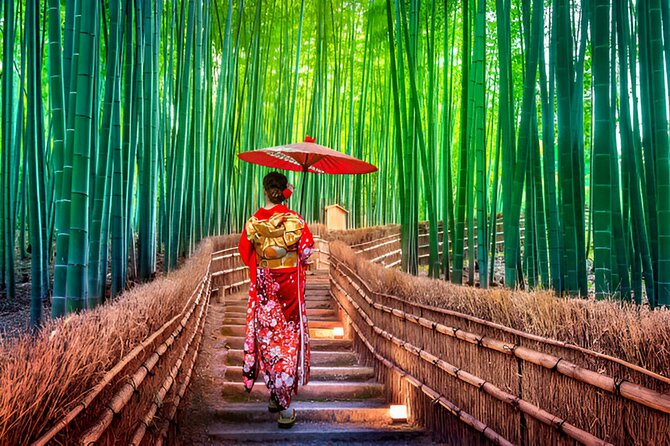
Arashiyama: scenic start with room to breathe
Arashiyama is listed for about 1 hour and listed as free. It’s a good opening because the area gives you nature views and a slower mood right away.
Tip: If it’s crowded, don’t force it. Pick one main direction to walk and focus on what’s in front of you, rather than trying to see every angle.
Kinkaku-ji Golden Pavilion: the iconic exterior and reflections
Kinkaku-ji is planned for about 40 minutes and its admission fee is not included. The tour notes the gold leaf exterior and the reflection in the water, which is exactly what you want to line up your photos.
Since your time is short, go early, position yourself for the main view, then move on. You’ll get the effect without spending 40 minutes searching for the perfect spot.
Fushimi Inari-taisha: torii gates with a practical time limit
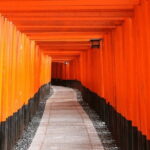
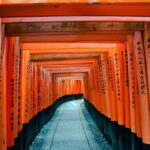
Fushimi Inari-taisha is scheduled for about 40 minutes and its admission is free. The description emphasizes thousands of vermilion torii gates along a hiking-style route.
Here’s the reality of a time-limited visit: you can enjoy the gates and atmosphere without going far up the entire route. A good plan is to walk far enough to feel the gates pulling you forward, then turn back before you lose your energy.
Kiyomizu-dera: a UNESCO classic with a fixed window
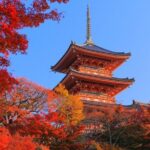
Kiyomizu-dera is listed for about 40 minutes, with admission fee not included. The tour details call it a UNESCO World Heritage Site and a key Kyoto symbol.
Consideration: The hill area can be crowded depending on the day. If you want better photos, aim for a calmer moment rather than the most obvious front position.
Gion: walking streets and traditional district vibes
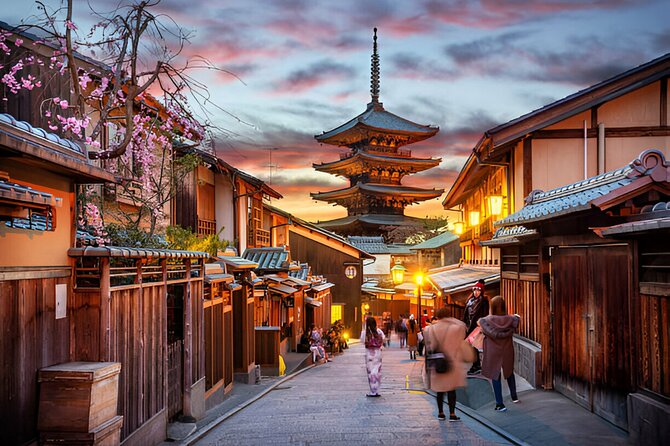
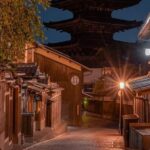
Gion is listed for about 1 hour and its admission fee is shown as not included. The tour description points to geisha district and traditional streets, which usually means people-watch time as much as sightseeing.
Treat this as a slow walk stop. If you try to rush, you’ll miss what makes Gion fun: the streetscape details and the changing scenes.
Sanjusangendo: 1,000 statues of Kannon for a focused moment
Sanjusangendo Temple is scheduled for about 40 minutes, with admission not included. The details highlight the one thousand life-sized statues of Kannon.
This is one of those “stop and look” places where short time is actually fine. You’ll get the main impression, and you won’t feel like you spent your whole day inside.
Ginkaku-ji Silver Pavilion: calm Zen energy without silver polish
Ginkaku-ji is scheduled for about 40 minutes, with admission not included. It’s described as the Temple of the Silver Pavilion, with the note that it is not actually covered in silver like Kinkaku-ji.
This is a nice contrast to Kinkaku-ji. If Kinkaku-ji is visual drama, Ginkaku-ji is quieter, with more attention to the atmosphere.
Nishiki Market: snack, shop, and recharge
Nishiki Market Shopping District is planned for about 1 hour 30 minutes and is free. This is a practical ending to a day of temples because it lets you regroup with food and small purchases.
If your group wants souvenirs, this is one of the best times to shop while you still have energy.
Kyoto Imperial Palace: a history anchor in a short visit
Kyoto Imperial Palace is scheduled for about 40 minutes and is listed as free. Even with a limited window, it gives you a different angle on Kyoto beyond the temple scene.
It’s also a good close because it feels structured and peaceful compared to market walking.
Price and value, plus what you will likely pay on top
The tour price is $1,646.41 per group, up to 5 people, for about 3 days. If you split it with a full group of 5, that’s roughly $329 each for transportation and the English-speaking driver, before meals and entry fees.
That matters because you’re also paying for the convenience of private transport across three cities. With public transit, you can save money, but you spend time and mental energy managing connections. Here, you pay to trade stress for more site time.
Entrance fees add up, so budget for them
Many stops list admission fees as not included. Examples from the tour details include:
- Osaka Castle (not included)
- Solaniwa Onsen Osaka Bay Tower (not included)
- Shinsekai Inari Shrine (not included)
- Todai-ji (not included)
- Nara National Museum (not included)
- Isuien Garden (not included)
- Kinkaku-ji (not included)
- Kiyomizu-dera (not included)
- Gion (listed with a fee not included)
- Several additional temples and gardens (fees not included)
My advice: Before you book, do a quick estimate using the per-person fee list in the details and decide whether you want to include every paid stop. If you skip one paid site, you can still have a full day worth of memories.
English driver magic: what you gain beyond language
A good guide does more than translate. It helps you move better through crowded areas, understand what matters most, and avoid wasting time trying to figure out the next step.
The strongest real-world clue in the provided feedback is that the English-speaking guide, Vicky, was very patient and helped with heat by buying beverages for the group during summer. That kind of small care is exactly what makes private touring feel worth it when conditions are tough.
Also, because you’re not on a fixed group bus schedule, you can treat each stop like a choice, not a race. If your group wants shopping time after temples, you can usually work that in. If someone needs a bathroom break, it’s not a drama.
Pickup and drop-off, plus mobile ticket
The tour notes pickup offered and pick-up and drop-off included. It also mentions mobile ticket use. In practice, that usually means fewer last-minute steps on your side and more time to stay relaxed on arrival days.
How to plan your days so you feel good at the end
Even with a private driver, you’re still walking at temples, in parks, and through market areas. So I treat this kind of itinerary like a “pace with intention” plan.
- Wear comfortable shoes you can handle on uneven surfaces (temple grounds and older street lanes can be tricky).
- Carry water, especially since the tour can operate in hot summer conditions.
- Pick one or two “must photograph” sights each day, and let the rest be about atmosphere and time spent rather than perfect shots.
If you like structure, this tour gives it. If you like flexibility, it also allows for it. The key is using the private format to reduce friction, not to turn every stop into a marathon.
Who this tour fits best
This tour is a great match if you want Osaka, Nara, and Kyoto covered in one go, with an English driver and pickup. It’s especially useful for small groups who value comfort and want to avoid planning headaches.
It’s also a good option for food lovers, since Osaka includes time for street food in the Dotonbori area and also includes a dedicated noodle-history stop. For culture seekers, the temple and shrine schedule is heavy in a good way, with context added through museums and garden stops in Nara and Kyoto.
If you want the cheapest possible travel method, you’ll likely find public transit and DIY cheaper. But you’ll trade away convenience and the ability to keep a relaxed pace.
Should you book this private Osaka, Nara, Kyoto tour?
I’d book it if you want the big names in Osaka, Nara, and Kyoto without the stress of coordinating transport, and you’re okay paying extra for that convenience and for entrance fees.
I would think twice if your group is very budget-focused, because the list of per-person admission fees is long and the onsen stop is optional but paid. If you do book, I’d budget ahead and decide early which paid sites you truly care about.
FAQ
What is the duration and route of this tour?
It’s a 3-day private tour covering Osaka, Nara, and Kyoto.
How much does the tour cost?
The price is $1,646.41 per group, up to 5 people.
What is included in the price?
Private transportation, an English-speaking driver, and pick-up and drop-off are included.
What is not included?
Meals and all fees and taxes are not included. Entrance fees listed in the details are also not included, along with any guide.
Do I need to buy tickets for major attractions?
Yes for most paid stops. The details list entrance fees not included for many attractions like Osaka Castle, Todai-ji, Kinkaku-ji, and others.
Does the tour use mobile tickets?
Yes, the tour includes mobile ticket.
What is the cancellation policy?
Free cancellation is available. You can cancel up to 24 hours in advance for a full refund, based on the local start time.
More Tour Reviews in Osaka Prefecture


The Kyoto Shortlist: Other Days East

Latest out of Osaka Prefecture

Kyoto Excursions from Osaka, side by side.
 ★ 4.7Osaka/Kyoto: Hiroshima Miyajima Bus Tour & Shinkansen TicketFrom $277919 reviews
 ★ 4.5From Kyoto/Osaka: Kyoto Top Highlights 1-Day Guided Bus TourFrom $51714 reviews
 ★ 4.5Ancient Capital Tour: Kyoto and Nara Highlights from Kyoto/OsakaFrom $90332 reviews
 ★ 4.6Osaka/Kyoto: Amanohashidate & Miyama Tour with Boat & LunchFrom $71207 reviews
 ★ 4.0Kyoto and Nara Day Trip from OsakaFrom $198175 reviews
 ★ 3.5From Osaka or Kyoto: Kyoto and Nara 1-Day Bus TourFrom $64141 reviews
 ★ 4.8Volleyball in Osaka, Kobe & Kyoto with locals!From $6131 reviews
 ★ 5.0Full Day Tour of Kyoto with Private TransportationFrom $247130 reviews