
REVIEW · KYOTO EXCURSIONS FROM OSAKA
Osaka/Kyoto: Arashiyama, Fushimi Inari & Nara Park Day Trip
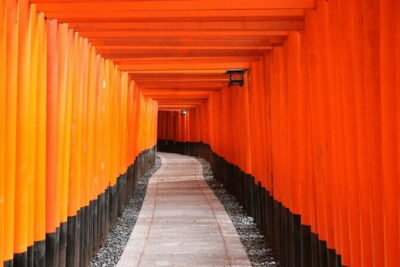
That first red torii tunnel hits fast. This guided day trip strings together Fushimi Inari, Nara Park deer, and Kyoto’s Arashiyama sights, with comfortable group transport and time to wander. You’ll see the big-name highlights, but the pacing also leaves room for your own photos and slow moments in calmer corners.
I especially like the way it packs several must-sees into one efficient route, so you do not waste your day bouncing between stations. I also like the human touch, since guides are repeatedly praised for being organized, funny, and helpful with practical tips like where to meet the bus and what to eat nearby. One possible drawback is that it is a long day with several walking breaks, so you will want good shoes and realistic expectations about how much time you get at each stop.
Quick takeaways
- Senbon Torii at Fushimi Inari: about 1 hour 10 minutes to enjoy the thousand red gates on your own terms.
- Nara Park deer time: a focused 1 hour at a park known for deer that come close and bow.
- Arashiyama Bamboo Forest, timed right: roughly 50 minutes in the main bamboo promenade so you can walk and pause for photos.
- Tenryu-ji UNESCO visit (extra fee): Temple entry is not included, so plan for the 500 yen ticket.
- Arashiyama mix-and-match stops: Nonomiya Shrine, Nakanoshima Park area, and the Kimono Forest art install.
- Guides with real energy: names like Amy, Laura, Scarlet, Steven, Frederick, Sofia, and Lucy show up in feedback for clarity, humor, and helpful food guidance.
The Osaka to Kyoto day plan, in plain terms
This is an about 9-hour day trip that runs from Osaka or Kyoto and takes you through Kyoto and Nara highlights. You get an air-conditioned vehicle and a guide, plus a mobile ticket, and the group size tops out at 45 travelers.
The trade-off is time. You will see a lot, but you are not doing a slow, multi-day shrine crawl. Think of it as a “great greatest-hits day” where you can decide which places deserve a return visit.
Other Kyoto days, compared
Fushimi Inari Taisha and the Senbon Torii walk
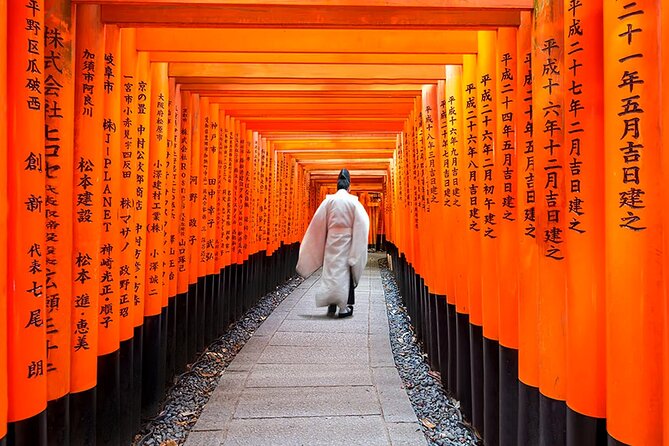
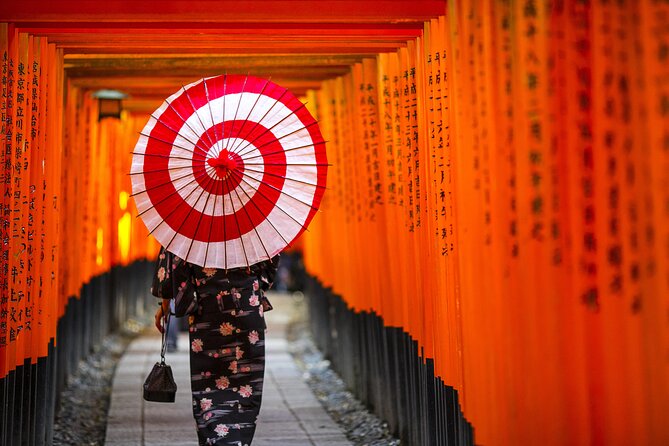
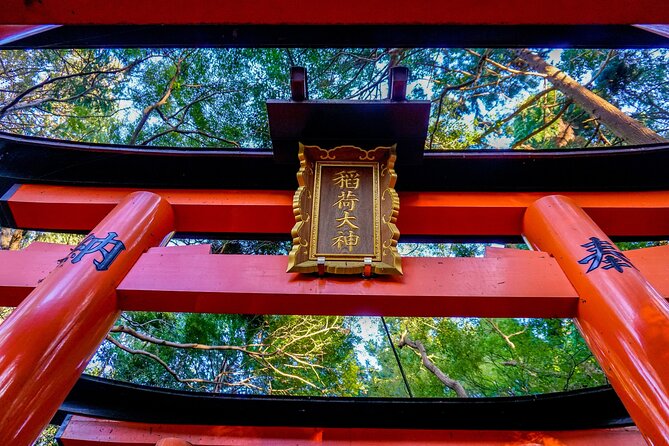
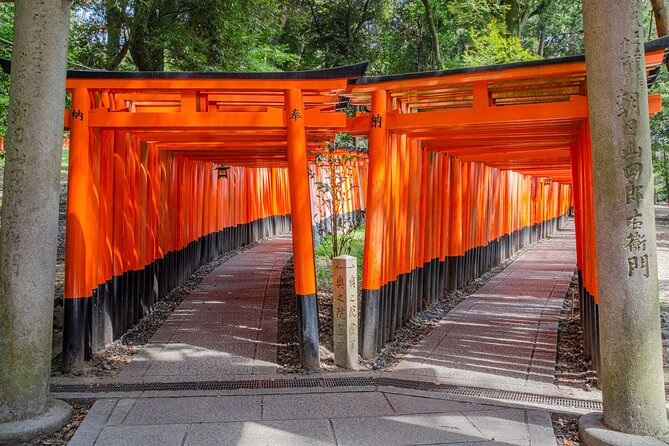
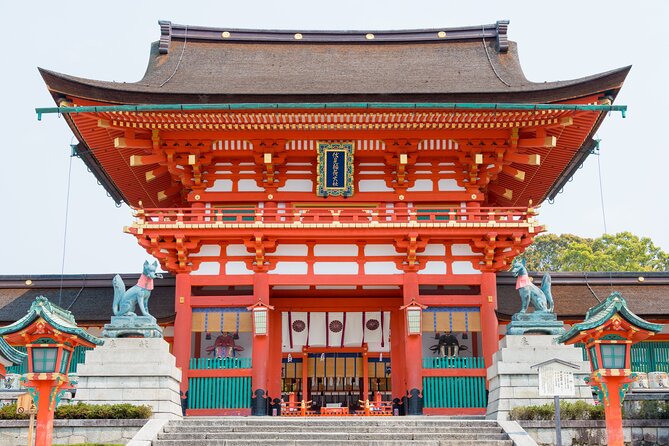
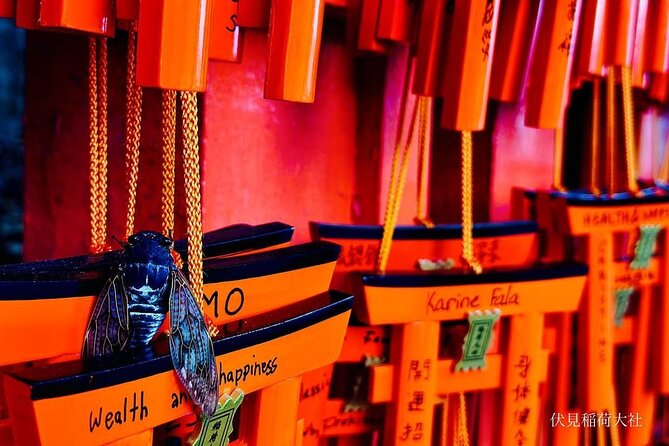
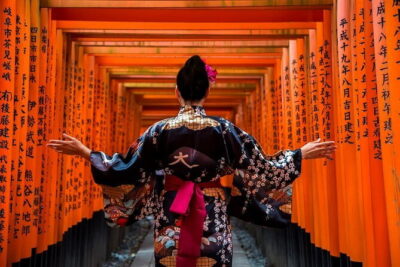
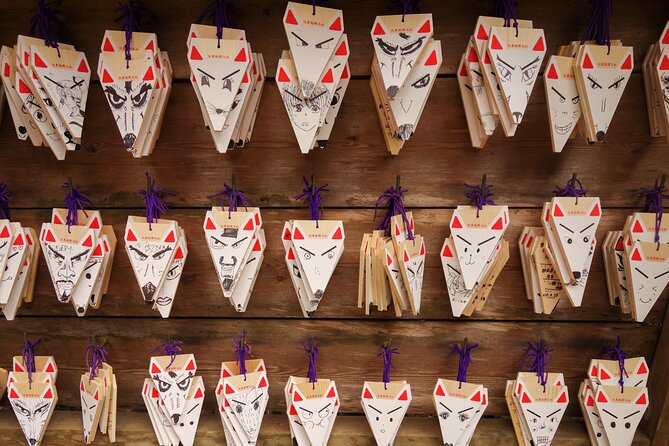
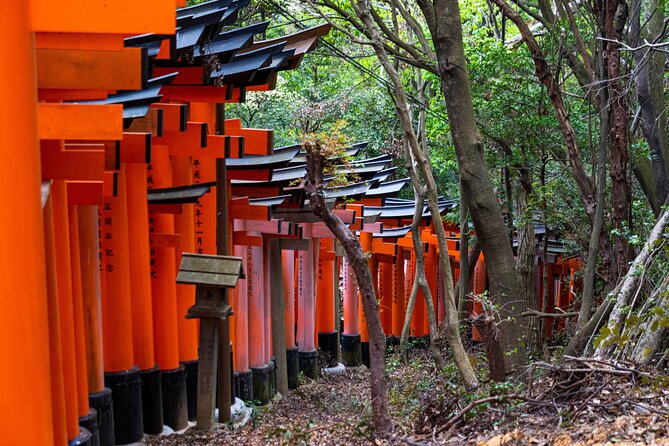
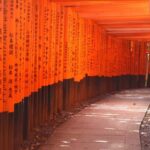
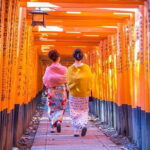
Your first major stop is Senbon Torii, the famous stretch of thousands of vermilion gates at Fushimi Inari Taisha. The site is dedicated to Inari, the Shinto god of rice, and it is known for the visual rhythm of gate upon gate leading you deeper into the complex.
You get about 1 hour 10 minutes, which is enough time to photograph the entrances, get a feel for the corridor-like path, and still wander without turning it into a sprint. If you like iconic sights, this stop is the one that feels most like the postcard version, but in a good way, because the gates keep changing perspective as you move.
One practical note: the walk is scenic, but it is still a walk. Comfortable shoes matter more than you think, especially if you want to linger around viewpoints.
Nara Park: deer encounters plus temple-park vibes
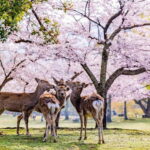
Next up is Nara Park, a huge park area famous for free-roaming deer and major temples nearby. The time is about 1 hour, and the main draw is the interaction, since the deer are known for approaching people and even bowing as if they are asking for a treat.
The best way to enjoy this stop is to treat it like a photo-and-people-watching zone, not a “controlled animal show.” Keep an eye on what is happening around you, stay calm when a deer gets close, and follow any on-site guidance about feeding. That way you get the charm without turning it stressful.
Also, deer plus walking means some unpredictability. If you are sensitive to animals approaching or you prefer quieter sightseeing, you may want to focus on temple areas rather than hovering in the densest spots.
Arashiyama’s quick orientation before the main event
After Nara, you transition into Arashiyama, on the west side of Kyoto. This region is well-known for scenic attractions and historic significance reaching back to the Heian period, so it has that “old Kyoto feel” built into the setting even before you reach the bamboo.
You get a shorter stop first, about 10 minutes, which works like an orientation. You get to register the area’s vibe, then you move straight toward the most famous section: the bamboo.
If you arrive and think, I do not feel like I have time, that is normal. This trip is designed to use that first moment to get you oriented so the later stops land better.
Arashiyama Bamboo Forest: how to use 50 minutes well
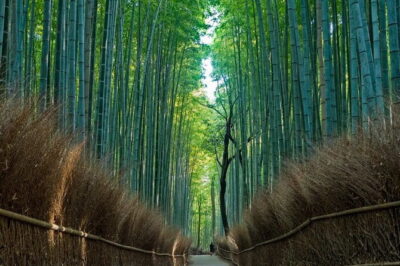
The highlight stop is the Arashiyama Bamboo Forest, with about 50 minutes allotted. The bamboo promenade is famous for its solemn atmosphere, created by rows of tall stalks forming a kind of tunnel effect overhead.
Fifty minutes goes quickly if you spend it only snapping photos. I suggest splitting it mentally: first, a slow walk to get the big views; then pause for photos without rushing; finally, do one “lookback” pass where you return toward your starting area to catch a different angle.
Even if you are not a bamboo fanatic, this is one of those places where the setting does the work for you. When the bamboo closes around your path, the crowd energy drops a notch, and it becomes easier to enjoy the quiet mood.
More runs out to the deer park
Nonomiya Shrine and its black torii moment
From bamboo, you head to Nonomiya Shrine, a Shinto shrine in the Arashiyama district. Unlike the classic vermilion torii gates people expect at shrine entrances, Nonomiya is known for a distinctive black torii gate.
You get about 20 minutes here, which is perfect for a focused shrine visit rather than a long detour. This is one of the best stops for slowing down, because it feels more “local Kyoto” than the headline list.
If you enjoy small contrasts, the black torii is a nice reminder that Japan’s shrine world has variations. That short stop can be a mental reset after the bamboo’s height and density.
Tenryu-ji Temple: UNESCO calm plus a 500 yen ticket
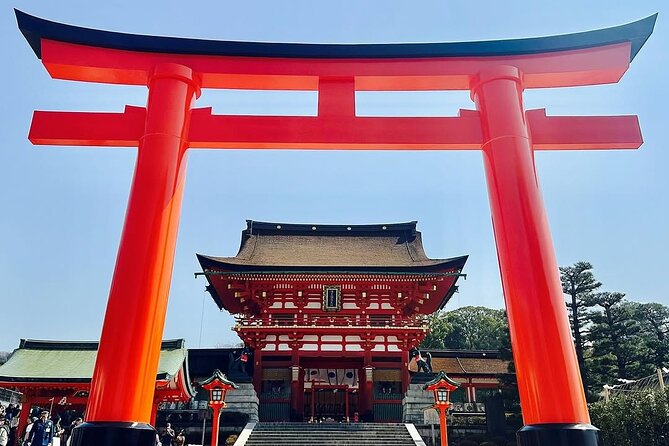
Tenryu-ji Temple is the UNESCO stop in Arashiyama, and it is described as ranking top among Kyoto’s five great Zen temples. The time here is about 20 minutes, and the temple ticket is not included with the tour. The listed entry fee is 500 yen.
That extra fee is worth factoring into your budget, but it is also a sign that you are paying mainly for the guide and logistics, while admission is handled separately for one key site. If you want to avoid any last-minute surprises, bring some cash so you are not scrambling when you reach the ticket desk.
With only 20 minutes, your success depends on your priorities. I would treat it as a quick “see it, feel it, decide if you want more later” stop. If Tenryu-ji is your top priority, you will likely want a second visit on another day with a longer window.
Arashiyama Park Nakanoshima: seasonal color time
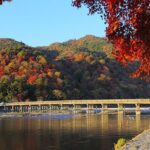
Next is the Arashiyama Park Nakanoshima area, with about 30 minutes. This spot is known for cherry blossoms in spring and autumn colors later in the year, which means the main payoff changes depending on when you travel.
Even outside peak season, the time allotment helps. Thirty minutes gives you space for a riverside stroll or relaxed walking while still keeping the day on schedule.
If you are going in spring or fall, this stop is one of the best “atmosphere” pieces on the itinerary. If you are going in a less photogenic season, it still works as a breather between temple and art stops.
Kimono Forest: 600 acrylic pillars for bold photos
The final Kyoto-style stop is the Arashiyama Kimono Forest, an art installation made up of 600 clear acrylic cylinders, each about 2 meters tall, covered in kimono fabric designs. You get about 20 minutes, and it is one of the easiest stops to enjoy because it is straightforward to walk through and photograph.
This is not a quiet, contemplative shrine stop. It is colorful and graphic, and it is a great counterbalance to bamboo’s vertical calm. If you like taking pictures with a strong visual theme, this stop tends to deliver fast.
Price and value: what $57 really buys
At $57 per person, the main value here is that you pay for guided routing plus transportation and keep the admissions mostly simple. The tour includes an air-conditioned vehicle and a guide, and most stops in the plan list free admission.
What costs extra is mainly practical stuff. Lunch is not included, so you will want to budget time and money to eat on your own. Also, Tenryu-ji Temple has a separate 500 yen ticket, so plan for that one added entry cost.
For value, I think the math works best if you are time-limited and want the big highlights without figuring out train transfers and group pacing yourself. If you already know exactly where you want to go and you are comfortable designing your own route, the price might feel less magical. But for a one-day plan that hits Fushimi Inari and Arashiyama plus Nara, it is a solid deal.
What the group experience feels like (and who it fits best)
This is built as a guided day with a structured sequence. Feedback quality points again and again to the guides being organized and easy to follow, with names like Steven, Frederick, Laura, Amy, Scarlet, Sofia, and Lucy showing up in that pattern. You can also tell they focus on keeping the day smooth, including practical reminders like bus location updates and clear meet-up timing.
You will likely enjoy this tour most if:
- you have one day (or close to it) and want a high-yield route
- you like guided context so the sights connect instead of feeling random
- you prefer a “see it once, then return later if you fall in love” style of sightseeing
You might want to pick something else if:
- you want deep, slow time at a single temple or shrine
- you dislike crowds and want maximum solitude
- you need a true sit-down lunch included in the price
And do not underestimate the walking. One piece of advice stands out in feedback: wear comfortable shoes, because the day has plenty of moving around even when the stops are short.
Should you book this Osaka to Kyoto and Nara day trip?
If your goal is to hit the headline sights in one long but well-run day, I would book it. This itinerary makes sense for first-timers who want to see Fushimi Inari’s Senbon Torii, meet the Nara deer, and experience Arashiyama’s bamboo and UNESCO Tenryu-ji without spending your trip time solving logistics.
I would not book it if you want a relaxed, unhurried pace or if Tenryu-ji is the only reason you are traveling, because the time there is short and entry is extra. Also, if deer close encounters make you uncomfortable, you may find Nara less fun than you hoped.
In short: book it for efficient highlights and strong guiding. Pair it with comfortable shoes, a plan for lunch, and the mindset that you are choosing highlights today, not conquering every corner forever.
FAQ
How long is the day trip?
It runs for about 9 hours.
What’s included in the price?
The tour includes an air-conditioned vehicle and a guide.
Is lunch included?
No. Lunch is not included.
Do I need to pay for Tenryu-ji Temple?
Yes. Tenryu-ji Temple ticket costs 500 yen and is not included.
Which major sights are visited?
You’ll visit Senbon Torii (Fushimi Inari Taisha), Nara Park, Arashiyama Bamboo Forest, Nonomiya Shrine, Tenryu-ji Temple, plus Arashiyama Park Nakanoshima and Arashiyama Kimono Forest.
How large is the group?
The tour has a maximum of 45 travelers.
Is free cancellation available?
Yes. You can cancel for a full refund up to 24 hours in advance.
Gates, Bamboo and the Rest
More Mornings with the Deer

The Kyoto Shortlist: Other Days East


Latest out of Osaka


Kyoto Excursions from Osaka, side by side.
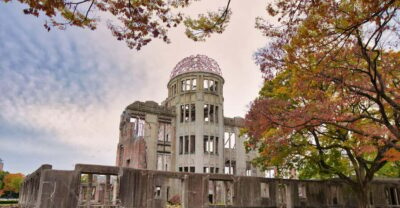 ★ 4.7Osaka/Kyoto: Hiroshima Miyajima Bus Tour & Shinkansen TicketFrom $277919 reviews
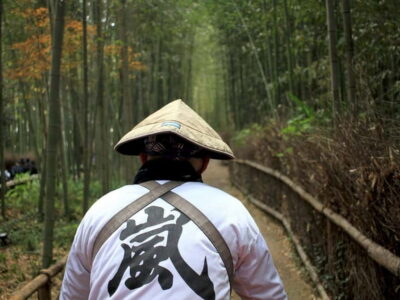 ★ 4.5From Kyoto/Osaka: Kyoto Top Highlights 1-Day Guided Bus TourFrom $51714 reviews
 ★ 4.5Ancient Capital Tour: Kyoto and Nara Highlights from Kyoto/OsakaFrom $90332 reviews
 ★ 4.6Osaka/Kyoto: Amanohashidate & Miyama Tour with Boat & LunchFrom $71207 reviews
 ★ 4.0Kyoto and Nara Day Trip from OsakaFrom $198175 reviews
 ★ 3.5From Osaka or Kyoto: Kyoto and Nara 1-Day Bus TourFrom $64141 reviews
 ★ 4.8Volleyball in Osaka, Kobe & Kyoto with locals!From $6131 reviews
 ★ 5.0Full Day Tour of Kyoto with Private TransportationFrom $247130 reviews