
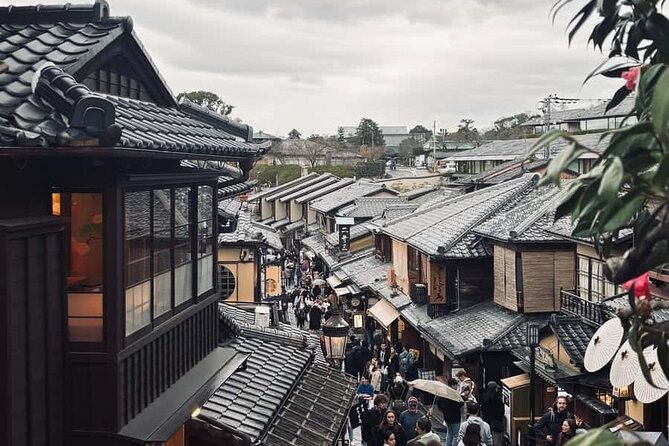
REVIEW · KYOTO EXCURSIONS FROM OSAKA
Kyoto Customized Private Car Tour
Kyoto in one stress-free day. This private car tour strings together top sights like Fushimi Inari and Arashiyama, with a guide who keeps the day moving at your pace. Expect a bilingual guide and comfortable transport built for seeing a lot without feeling like you are sprinting.
I like two things most. First, the experience is genuinely flexible, so when you have a list, your guide helps you get there and adjust the plan. Second, the “driver plus expert guidance” combo matters, and names like Mani, Talha, and Ali show up in feedback for being punctual, friendly, and helpful on the road.
One thing to consider: it is a packed day. You have multiple major stops spread across the city, so you should plan for a fair amount of walking and ticket handling in a single eight-hour window.
Quick hits before you go
- A private day, up to 6 people, with your own car and guide, so the pace can match your group
- Multilingual support in English plus Spanish, Hindi, and Urdu
- Smart sightseeing order, including Fushimi Inari and Arashiyama in the early mix so you can get good viewing time
- High-impact temples and cultural stops (gold pavilion, sand and moss gardens, Sanjusangendo statues, and Gion Corner)
- Guides who tailor the plan, with feedback praising customization and practical help getting to places
- Bottled water included, but food is on you, so you will want a snack plan
Price and logistics: what you are really paying for
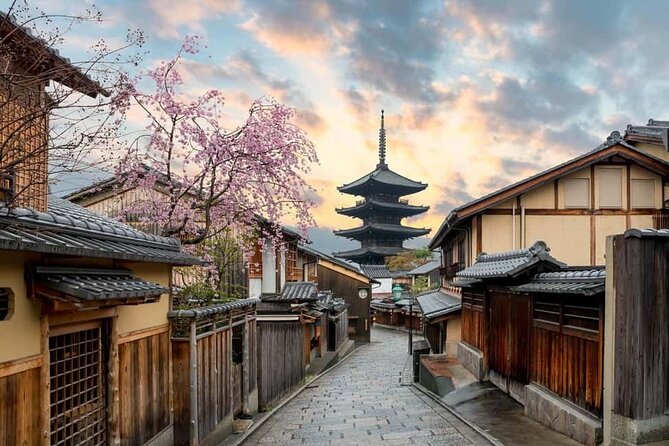
At $553.80 per group (up to 6), this is priced like a real private day, not a budget bus ride. The math gets friendlier when your group fills up: at 6 people, you are effectively around $92 each for transportation plus guidance for the day. If you come as fewer people, it is still good value if you care about time, comfort, and not wrestling transit with luggage and maps.
This is listed as an 8-hour tour with transportation from the meeting point and a private car. That matters in Kyoto. The city looks compact on a map, but temples and neighborhoods can take time to reach. A private vehicle helps you spend more of your day at the sights, not between them.
You also get a mobile ticket and a guide who can help with logistics. Many of the stops have ticketed areas or optional entry choices, so having someone who can point you to the right ticket path can save you stress.
Other Kyoto days, compared
Your comfort advantage: private car + flexible pacing
A common complaint on one-day sightseeing routes is that you feel herded. Here, the tone is more “guided day trip” than “line up and go.” The tour includes flexible plans as per your clients, which is a polite way of saying you can keep your priorities without abandoning the major Kyoto hits.
The private format also makes it easier to handle real-life travel needs. If someone in your group needs a bathroom break, wants slower pacing, or wants to linger for photos at a specific pond or gate corridor, you are not stuck waiting for a big bus schedule.
In feedback, drivers and guides like Mani, Talha, and Ali come up for being punctual and friendly, and for making the day feel easier than DIY touring. That is exactly what you want when you only have a short stay and you want Kyoto to feel special without eating up your whole day figuring out transport.
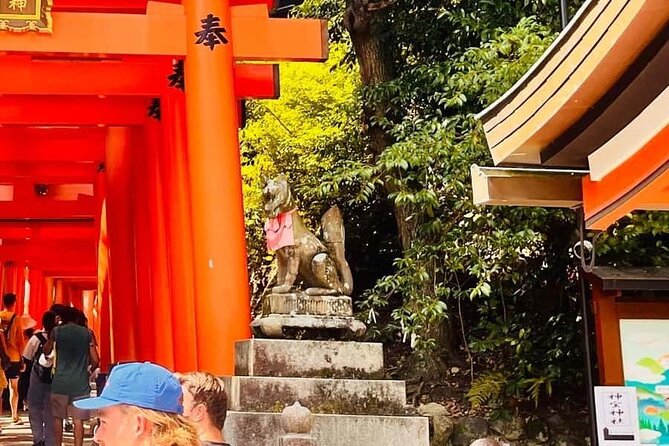
Starting with Fushimi Inari-taisha and gates that go on forever
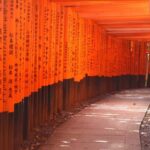
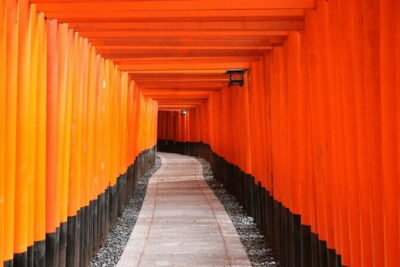
Fushimi Inari-taisha is the kind of place that changes how you walk. You enter under red torii gates, and suddenly you are following a path that feels both orderly and endless. It is famous for a reason, but the best part is how it keeps revealing different views as you move deeper into the area.
If you can get an early start, it helps. One review highlighted that starting in the morning let them beat crowd pressure at the first temples. Even if your timing is not razor early, going with a guide and a vehicle plan still helps because you spend less time stuck in transit and more time actually in the shrine areas.
Practical tip: this is not just a “take one photo and leave” stop. Wear shoes you can walk in for a while. Bring a light layer if the weather swings, and keep your camera ready because the gate walls create photo angles again and again.
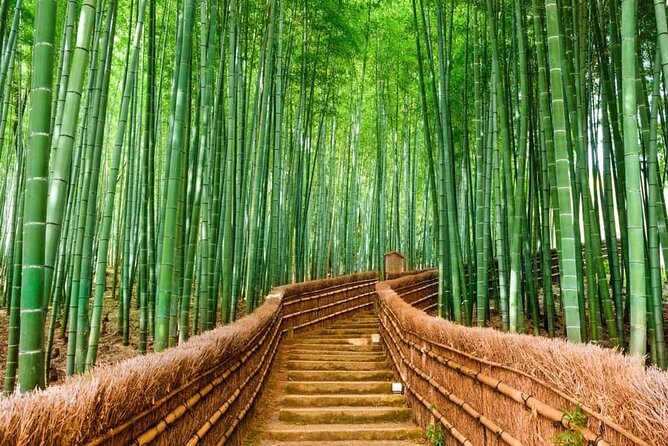
Arashiyama Bamboo Grove: calm in the middle of motion
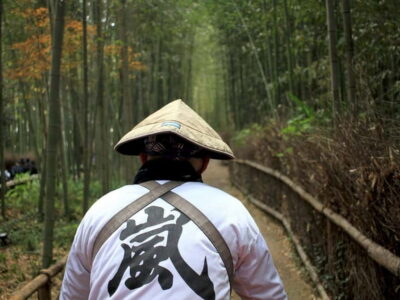
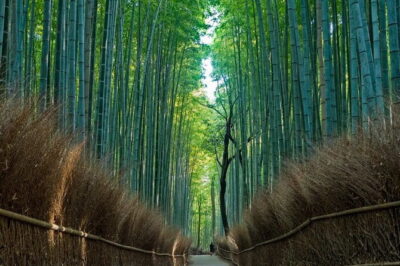
From shrine to nature, Arashiyama bamboo grove is a shift in mood. The towering bamboo creates a quieter feel, like the area has its own tempo. You get that famous grove atmosphere where the stems make repeating lines and your photos look naturally patterned.
This stop is also a reminder that Kyoto is not only temples. It is seasonal landscapes and daily rhythms. Even if the grove is busy, it still works because the bamboo stands act like a visual filter. With a guide, you also get a sense of where to walk for the best views and how to keep the rest of the day flowing.
Practical tip: keep your expectations realistic. It will be popular. The value of a private car day is that you can arrive at a time that gives you decent viewing before the crowd wave builds too high.
Kinkaku-ji (Golden Pavilion): gold leaf meets still water
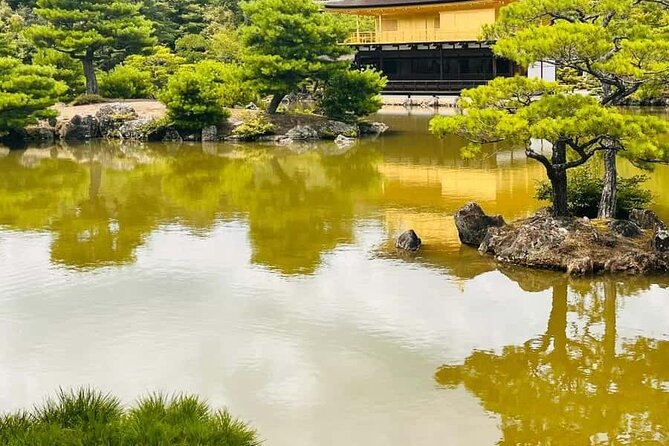
Kinkaku-ji is the temple people picture when they think “Kyoto.” The gold-leaf exterior and the reflective pond give you a classic composition: bright temple against calm water. Even when you know the basics, the effect is hard to fake in photos. The way the light hits the gold changes as you move around the pond edge and approach viewpoints.
Entry rules are important here. The tour description notes entry is handled with tickets where required. That means you should plan mentally for the normal temple entry process, not just walk up and wander instantly everywhere.
If your group cares about photos, give yourself a few extra minutes. This stop is short on paper, but the best angles are usually around where the pond reflection lines up with the temple shape. A guide can help you avoid wasted time and get you to good viewpoints faster.
More days built around your list


Nijo Castle and its famous nightingale floors
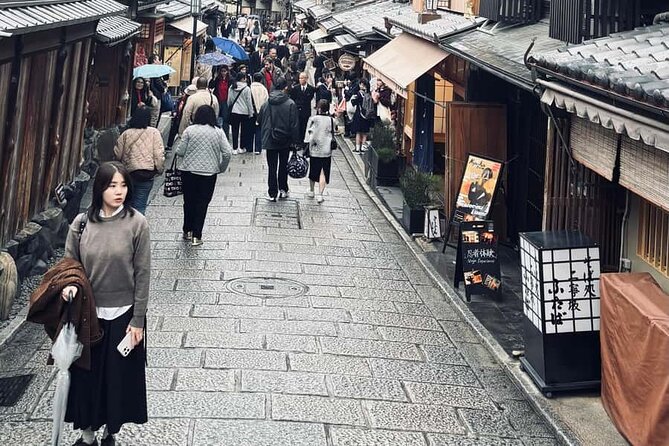
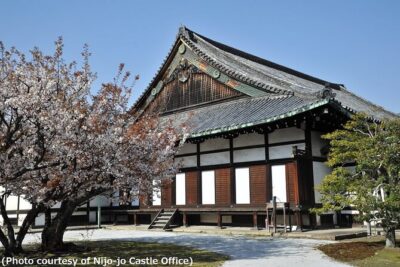
Nijo Castle brings a different kind of Kyoto drama. Instead of gate paths and gardens, you get elegant rooms, cultivated grounds, and the famous nightingale floors. These are built to create sound underfoot, tied to the castle’s security concept.
The tour description specifically points out the nightingale floors as a highlight and notes that ticketing is required for that experience area. That is why having someone help you sort tickets in advance is valuable. You will spend less time deciding and more time enjoying.
Practical tip: castle interiors often mean extra stairs, narrow circulation paths, and time windows. If you are traveling with older family members or anyone who moves slowly, this is a place to pace carefully and plan for rest.
Kiyomizu-dera: hillside views and old-street energy

Kiyomizu-dera sits up on a hillside, so it naturally feels bigger than it looks from the street. The iconic wooden stage gives you sweeping views of Kyoto, and the surrounding area adds that classic old-neighborhood feel with nearby shops.
The tour description flags Kiyomizu-dera as an entry-with-ticket stop. That is a normal part of the experience. Expect some waiting, follow the route signs once you are inside, and use your guide to help you choose the best order so you do not double back too much.
Practical tip: if the weather is clear, prioritize the viewpoints. The views are the whole point here. If it is cloudy or rainy, still go. You will get a different mood, and the hillside location can feel very cinematic even without bright blue sky.
Ginkaku-ji (Silver Pavilion): moss, sand, and Zen restraint
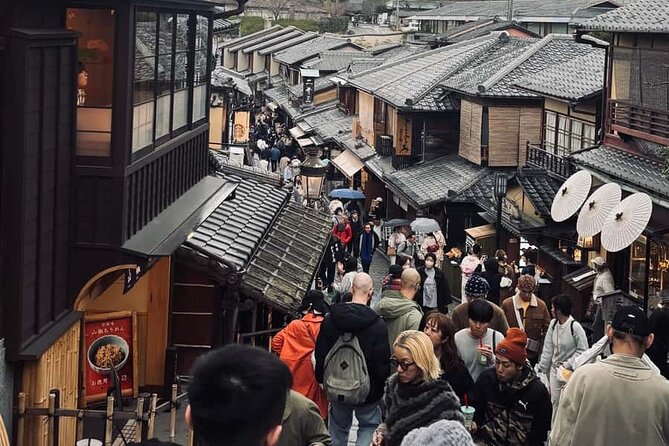
If Kinkaku-ji is about showy brightness, Ginkaku-ji leans into calm and restraint. You get the refined Zen vibe through moss gardens and the famous sand garden. It is the kind of stop where the details matter more than speed.
Again, this is a one-stop-per-hour style of touring, so you will not have hours and hours at one garden. The private car format helps because you can spend your time more intentionally. If your group prefers atmosphere over landmark hunting, this is where you can slow down.
Practical tip: gardens feel best when you stop moving for a minute. Give your eyes time to catch the patterns in the moss and sand textures, even if your feet are tempted to keep going.
Sanjusangendo: 1,001 golden statues in a long hall
Sanjusangendo Temple is one of those experiences that hits you as a scale surprise. The hall is known for 1,001 golden statues of Kannon, the goddess of mercy, lined up in a long wooden space. It is not only the fact that there are so many statues. It is how the long hall makes you feel like you are surrounded.
The tour description emphasizes the longest wooden hall detail, which is exactly what you should expect once you walk in: length, repetition, and a strong sense of order.
Practical tip: this is a good stop for anyone who wants something quieter after walking lots of streets. It is also a great place to do slow looking, because you will naturally want to compare the statues and see how your viewpoint changes.
Gion Corner: culture on stage without the mystery
After temples, Gion Corner gives you a structured look at traditional culture. The tour description lists performances and demonstrations such as dance and tea ceremony presentations. It is a way to understand the geisha culture context without having to figure out tickets and venues on your own.
This is also where the multilingual guide becomes more useful. Even if performances are mostly visual, having someone explain what you are seeing can turn a one-hour show into something you remember.
Practical tip: showings run on schedules. If you are running slightly behind, you do not want to be stuck re-routing. That is another reason to book a format with private transport and a guide who can keep the day on track.
Nishiki Market: Kyoto kitchen snacks and souvenirs
Nishiki Market is the shopping district stop where the day becomes more personal and edible. You get that Kyoto Kitchen feeling, with street food samples and local specialties, plus souvenirs you can actually bring home.
Food and drinks are not included on this tour, so treat Nishiki as your chance to spend in the way that fits your appetite. If you want to sample a few bites, do it gradually. Try one sweet and one savory instead of loading up early, then balance it with a proper sit-down meal later if the day still has energy.
Practical tip: markets get crowded. When you go, expect to move slowly through stalls. Your guide can help you keep moving toward key areas instead of wandering for an hour.
What the guide experience feels like in real life
In the feedback you can see a pattern: the people driving and guiding the day are the reason it feels effortless. Mani is praised for customization, and Talha gets credit for being courteous, punctual, and knowledgeable. Ali is mentioned as both driver and guide, with the strong point that doing all these stops without help would be much harder.
That lines up with the tour’s overall promise. You are not just booking seats and a route. You are buying someone who can:
- plan the order of stops to reduce wasted time
- help you navigate ticketed areas
- keep your group together safely and on schedule
- translate and explain across multiple languages
Even if you are comfortable traveling independently, this kind of day trip is a stress reducer. You can focus on the experience instead of the logistics.
Day-trip timing: how to avoid the end-of-day slowdown
With multiple landmark stops packed into about 8 hours, you should plan your day like a climber plans a route. Your energy is the limiting factor, not the map.
Here is how I would approach it if you want the day to feel enjoyable rather than exhausting:
- start with comfortable shoes and breathable layers
- treat the first stops as your “must photograph” phase
- keep water habits steady, since bottled water is included
- do a snack strategy for the mid-day gap because food is not included
Also, if you want those big temple viewpoints, do not wait until the last minute. The more you push late in the schedule, the more likely you will feel rushed during the best light or the most scenic angles.
Price and value for groups from 1 to 6
Let’s look at value honestly. You are paying for a private car, a bilingual guide, bottled water, and flexible pacing. That is not cheap, but it often becomes cost-effective compared to piecing together taxis plus individual tickets plus lost time.
If you are traveling with family or a friend group of 4 to 6, the cost per person becomes reasonable for a full day of transit support. If it is just 1 or 2 people, it becomes more of a “buy convenience” decision. You are paying so you can see Kyoto’s most famous spots without spending half your day coordinating transport.
Either way, the main value is time. Kyoto is not hard to visit, but it is hard to do well in a single day. This format is built to solve that.
Who should book this Kyoto private car tour
This tour fits you best if:
- you are first time in Kyoto and want the big names in one day
- you are short on time and based near Osaka
- you prefer private logistics over public transit hopping
- you want help with temple and ticketed areas
- you like the idea of mixing temples, gardens, and cultural performance
It is also a strong option for groups that include kids or mixed ages, as long as everyone can handle walking between major sights. If your group wants a slow, photography-only day with lots of time in just one neighborhood, you might feel this is too many stops.
Should you book this Kyoto private car tour?
I would book it if your goal is a smooth, high-coverage Kyoto day with real guidance. The private car format plus multilingual support is a big deal when you want to hit Fushimi Inari, Arashiyama, temple highlights, and a culture stop, then end at Nishiki Market without chaos.
I would pause before booking if your group hates packed schedules or has limited walking ability. With so many major sights in one day, you will not have long, relaxed time at every stop.
If you are in the sweet spot of “see Kyoto fast, but not stressful,” this is a strong match.
FAQ
Is this tour private?
Yes. It is a private tour, and only your group will participate.
How many people can be in a group?
The price is for up to 6 people per group.
How long is the Kyoto private car tour?
It is about 8 hours.
Is pickup included?
Yes. Transportation from the meeting point is included, and pickup is offered.
What languages does the guide speak?
The included guide support covers English plus Spanish, Hindi, and Urdu.
What is included in the tour price?
Included items are the bilingual guide, transportation from the meeting point, private transportation, and bottled water. Flexible plans are also included.
Are food and drinks included?
No. Food and drinks are not included.
Do I need tickets for the sights?
Some entry is described as ticket-based or ticket required, and the tour notes entry options based on ticket purchase. Admission details can vary by stop, so you should expect some sights to involve ticket handling.
Can I cancel for free?
Yes. Free cancellation is available if you cancel up to 24 hours in advance for a full refund.
More Tour Reviews in Osaka


A Day Built Around Your List



The Kyoto Shortlist: Other Days East

Latest out of Osaka


Kyoto Excursions from Osaka, side by side.
 ★ 4.7Osaka/Kyoto: Hiroshima Miyajima Bus Tour & Shinkansen TicketFrom $277919 reviews
 ★ 4.5From Kyoto/Osaka: Kyoto Top Highlights 1-Day Guided Bus TourFrom $51714 reviews
 ★ 4.5Ancient Capital Tour: Kyoto and Nara Highlights from Kyoto/OsakaFrom $90332 reviews
 ★ 4.6Osaka/Kyoto: Amanohashidate & Miyama Tour with Boat & LunchFrom $71207 reviews
 ★ 4.0Kyoto and Nara Day Trip from OsakaFrom $198175 reviews
 ★ 3.5From Osaka or Kyoto: Kyoto and Nara 1-Day Bus TourFrom $64141 reviews
 ★ 4.8Volleyball in Osaka, Kobe & Kyoto with locals!From $6131 reviews
 ★ 5.0Full Day Tour of Kyoto with Private TransportationFrom $247130 reviews